20 Different Roman Emperors on Bronze Coins 253-450 CE, plus Roman Oil Lamp & Bronze Ring 100 BCE-450 CE & Book "Chronicle of the Roman Emperors"
560-362
$699.95
Free Shipping
or
12 Payments of $58.32
with
Product Overview
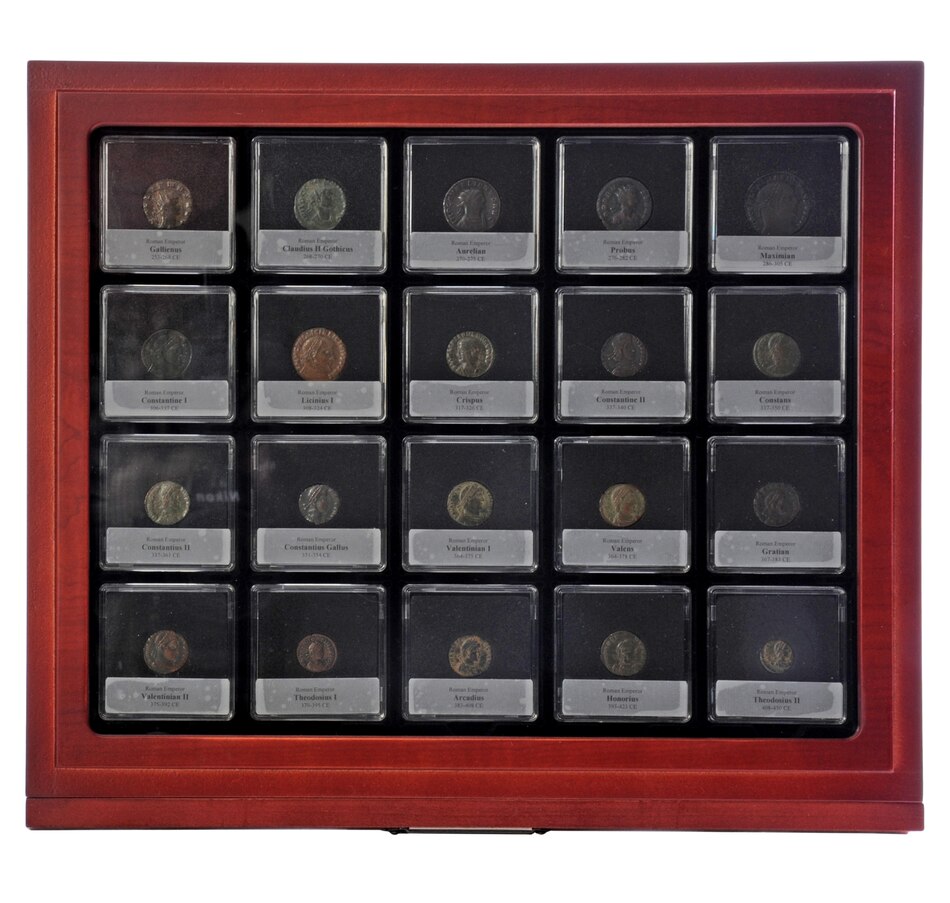
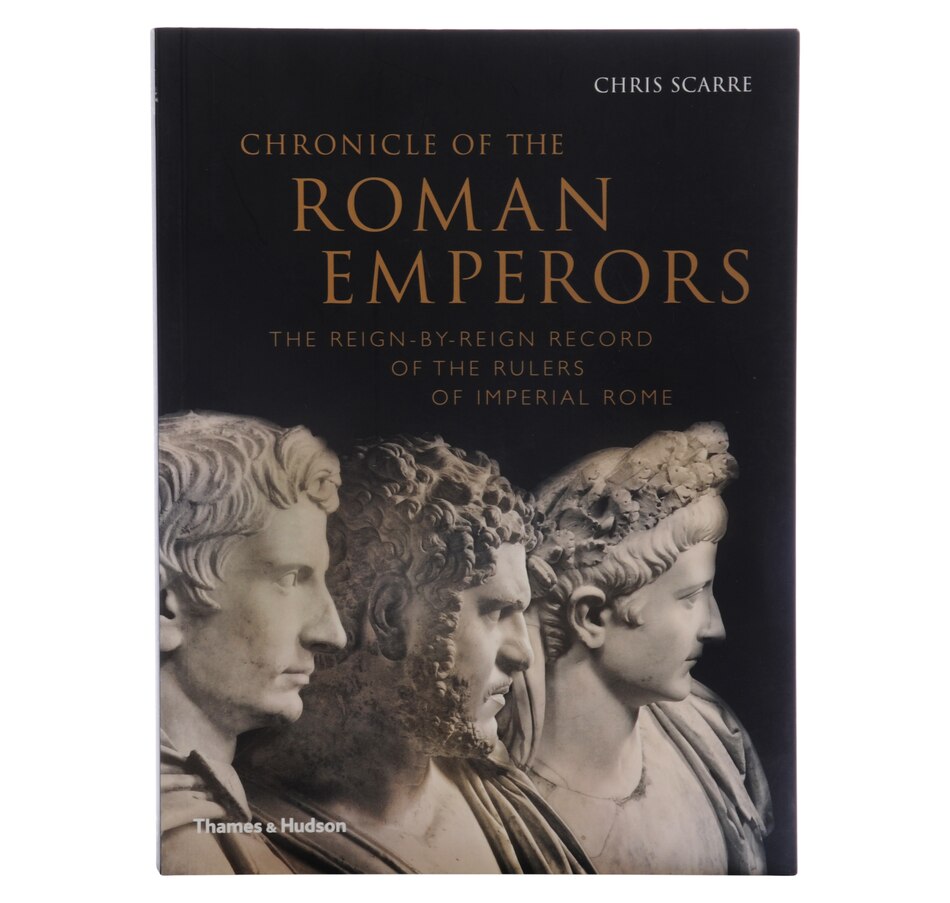
This collection chronicles one of the most volatile and fascinating times of the Western world with 20 bronze coins dating from the reigns of 20 different roman emperors between the years 253 to 450 CE. The coins are exceptionally well preserved, especially when considering they range from the “newest” coin being more than 1600 years old, and the oldest coins dating back more than 1,760 years. Every coin is guaranteed to be a genuine original coin from ancient Rome, and the collection comes with a certificate of authenticity. The collection comes beautifully presented in custom mahogany finish display case suitable for presentation. To learn more about all of the emperors included, a 240-page book titled Chronicles of the Roman Emperors is also included. To enhance your collection and complete transporting you to another era, a genuine ancient Roman oil lamp and Roman bronze ring are also included.
This collection starts with the last barracks (or soldier) emperor, Gallienus. A barracks emperor was a Roman Emperor who seized power by virtue of his command of the army. Barracks emperors were especially common in the period from 235 through 284, during the Crisis of the Third Century.
The Illyrian emperors were a group of Romans from the region of Illyricum, and were raised chiefly from the ranks of the Roman army (barracks emperors). The historical period of the Illyrian emperors begins with Claudius II Gothicus in 268 and ends in 284. This rather short period was very important in the history of the Empire, since it represents the recovery from the crisis of the third century the, a long period of usurpations and military difficulties. All of the Illyrian emperors, who also included Aurelian, and Probus, were trained and able soldiers, and they recovered some of the provinces and positions lost by their predecessors.
By 285 CE, the Roman Empire had grown so vast that it was no longer feasible to govern all the provinces from the central seat of Rome, and therefore was divided into halves with the Eastern Empire governed out of Byzantium and the Western Empire governed from Rome.
The Constantinian dynasty is an informal name for the ruling family of the Roman Empire, from 285-364. It is named after its most famous member, Constantine I "The Great," who became the sole ruler of the empire in 324. This bronze coin collection also includes emperors Maximian, Licinius I, Crispus, Constantine II, Constans, Constantius II and Constantius Gallus from this dynasty.
The Valentinian Dynasty consisted of four emperors who ruled the Western Roman Empire from 364 to 392 and the Eastern Roman Empire from 364 to 378. This collection includes Valentinian I, Valentinian I’s brother Valens, Valentinian II, Theodosius I, who married Valentinian I’s daughter, Arcadius who was the son of Theodosius I, Theodosius II, Gratian son of Valentinian I and Honorius, who was the brother of Arcadius.
Coin designs:
• 253-268 CE Gallienus: sought to repel the attacks of innumerable enemies
• 268-270 CE Claudius II Gothicus: he fought the Goths, the Vandals and Traitors
• 270-275 CE Aurelian: the illiterate military genius
• 276-282 CE Probus: the Emperor who believed that idle hands make mischief
• 286-305 CE Maximian: the Emperor who 'retired' and then returned
• 306-337 CE Constantine I: the Christian Emperor who united the Empire
• 308-324 CE Licinius I: the Emperor who fought against Constantine the Great
• 317-326 CE Crispus: the Caesar who was falsely accused of treason
• 337-340 CE Constantine II: killed fighting over territory with his brother
• 337-350 CE Constans: the Emperor who was put to death by an ambitious soldier
• 337-361 CE Constantius II: the second and worst of the sons of Constantine the Great
• 351-354 CE Constantius Gallus: his pardon failed to reach the executioner
• 364-375 CE Valentinian I: the Emperor given to fits of rage
• 364-378 CE Valens: the Emperor who allowed the Goths to settle on Roman territory
• 367-383 CE Gratian: the Emperor who was deserted and murdered by his soldiers
• 375-392 CE Valentinian II: the Emperor who was strangled to death
• 379-395 CE Theodosius I: the Emperor who resisted the Barbarians
• 383-408 CE Arcadius: dominated by one of his ministers, Rufinus
• 393-423 CE Honorius: the last known gladiatorial fight therefore took place during his reign
• 408-450 CE Theodosius II: extremely well educated and adept in using languages, theology and astrology
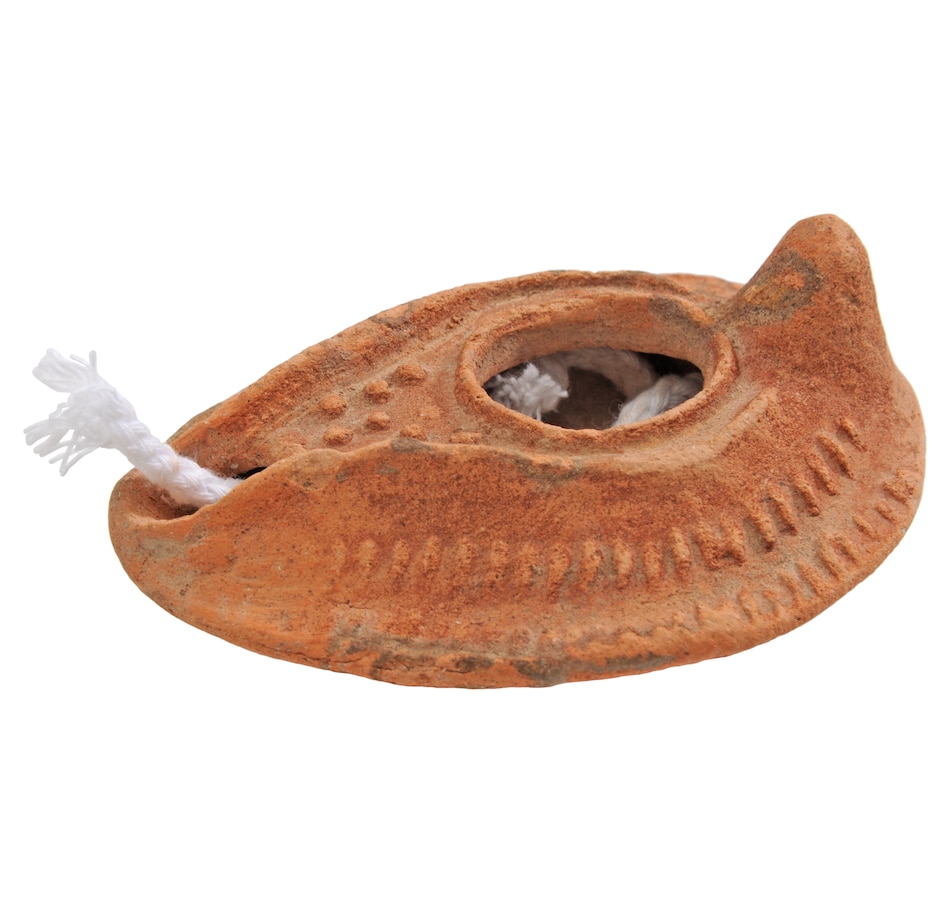
Ancient Roman oil lamp (100 BCE-450 CE):
To the ancients, an oil lamp was more than just a light source. It was a magical object that conquered the darkness of the night, and allowed life to continue after the sun had set. They were also used for votive offerings to the gods. They were even buried with the dead to comfort the soul and to light the way on the journey to the afterlife. They were generally made in plaster or clay molds, and often included reliefs of floral or geometric patterns.
Throughout most of the ancient world, olive oil was most commonly used as fuel, however oil from fish, nuts and other plants were also in use. Wicks could be made from all sorts of material, including flax, papyrus or reeds. Lamps were used in homes and in public places such as temples and public buildings.
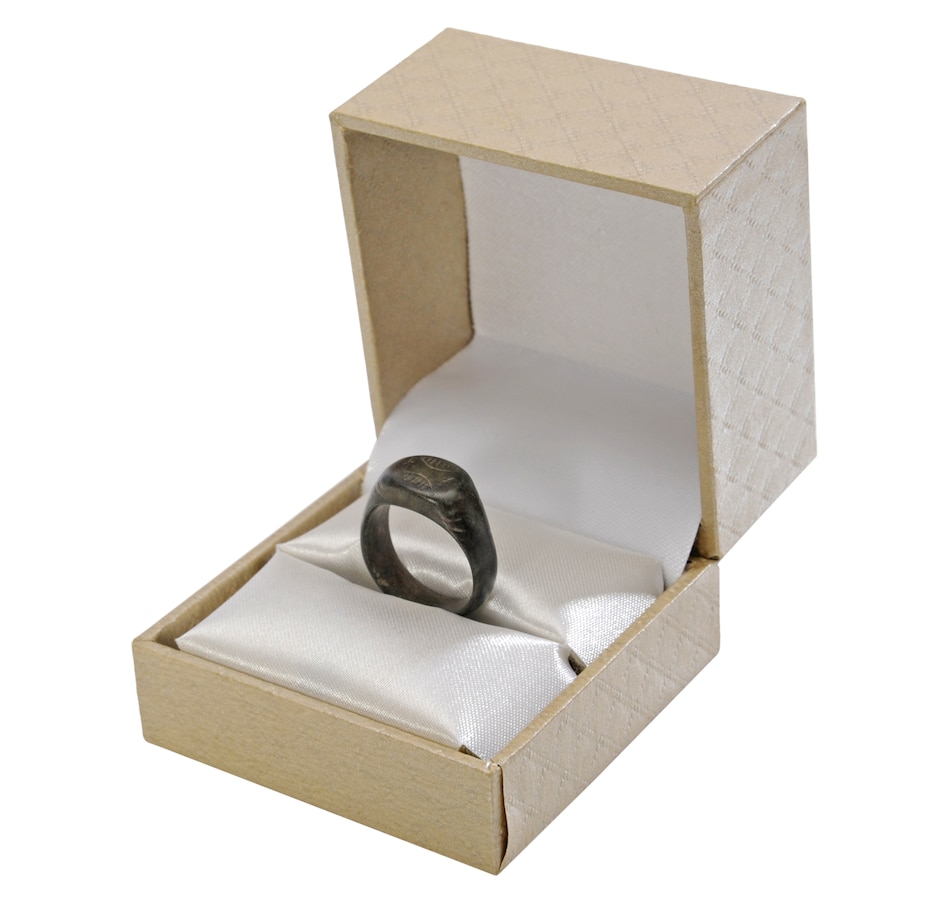
Ancient Roman bronze ring (circa 100 BCE - 200 CE):
Among the remains of Roman daily life is the finger ring, which was one of the most popular types of jewellery for men, women and children during the Roman period. Gold or silver rings were reserved for the wealthy and for officials of high rank, whereas bronze and iron rings were used by the common citizens of the Roman world. Rings such as this one were purchased by Romans for themselves and for family members, and would often be engraved with personal symbols of identification or with superstitious symbols to bring good luck or to ward off evil. It would have been worn with pride by its original owner through all his or her daily tasks nearly more than 1600 years ago. This ring remains suitable to be worn, or to be displayed as a relic of what was once the greatest empire on earth.
Includes:
• (20) Roman Emperors on Bronze Coins
• Roman Oil Lamp
• Roman Bronze Ring
• Chronicle of the Roman Emperors Book
This collection starts with the last barracks (or soldier) emperor, Gallienus. A barracks emperor was a Roman Emperor who seized power by virtue of his command of the army. Barracks emperors were especially common in the period from 235 through 284, during the Crisis of the Third Century.
The Illyrian emperors were a group of Romans from the region of Illyricum, and were raised chiefly from the ranks of the Roman army (barracks emperors). The historical period of the Illyrian emperors begins with Claudius II Gothicus in 268 and ends in 284. This rather short period was very important in the history of the Empire, since it represents the recovery from the crisis of the third century the, a long period of usurpations and military difficulties. All of the Illyrian emperors, who also included Aurelian, and Probus, were trained and able soldiers, and they recovered some of the provinces and positions lost by their predecessors.
By 285 CE, the Roman Empire had grown so vast that it was no longer feasible to govern all the provinces from the central seat of Rome, and therefore was divided into halves with the Eastern Empire governed out of Byzantium and the Western Empire governed from Rome.
The Constantinian dynasty is an informal name for the ruling family of the Roman Empire, from 285-364. It is named after its most famous member, Constantine I "The Great," who became the sole ruler of the empire in 324. This bronze coin collection also includes emperors Maximian, Licinius I, Crispus, Constantine II, Constans, Constantius II and Constantius Gallus from this dynasty.
The Valentinian Dynasty consisted of four emperors who ruled the Western Roman Empire from 364 to 392 and the Eastern Roman Empire from 364 to 378. This collection includes Valentinian I, Valentinian I’s brother Valens, Valentinian II, Theodosius I, who married Valentinian I’s daughter, Arcadius who was the son of Theodosius I, Theodosius II, Gratian son of Valentinian I and Honorius, who was the brother of Arcadius.
Coin designs:
• 253-268 CE Gallienus: sought to repel the attacks of innumerable enemies
• 268-270 CE Claudius II Gothicus: he fought the Goths, the Vandals and Traitors
• 270-275 CE Aurelian: the illiterate military genius
• 276-282 CE Probus: the Emperor who believed that idle hands make mischief
• 286-305 CE Maximian: the Emperor who 'retired' and then returned
• 306-337 CE Constantine I: the Christian Emperor who united the Empire
• 308-324 CE Licinius I: the Emperor who fought against Constantine the Great
• 317-326 CE Crispus: the Caesar who was falsely accused of treason
• 337-340 CE Constantine II: killed fighting over territory with his brother
• 337-350 CE Constans: the Emperor who was put to death by an ambitious soldier
• 337-361 CE Constantius II: the second and worst of the sons of Constantine the Great
• 351-354 CE Constantius Gallus: his pardon failed to reach the executioner
• 364-375 CE Valentinian I: the Emperor given to fits of rage
• 364-378 CE Valens: the Emperor who allowed the Goths to settle on Roman territory
• 367-383 CE Gratian: the Emperor who was deserted and murdered by his soldiers
• 375-392 CE Valentinian II: the Emperor who was strangled to death
• 379-395 CE Theodosius I: the Emperor who resisted the Barbarians
• 383-408 CE Arcadius: dominated by one of his ministers, Rufinus
• 393-423 CE Honorius: the last known gladiatorial fight therefore took place during his reign
• 408-450 CE Theodosius II: extremely well educated and adept in using languages, theology and astrology
Ancient Roman oil lamp (100 BCE-450 CE):
To the ancients, an oil lamp was more than just a light source. It was a magical object that conquered the darkness of the night, and allowed life to continue after the sun had set. They were also used for votive offerings to the gods. They were even buried with the dead to comfort the soul and to light the way on the journey to the afterlife. They were generally made in plaster or clay molds, and often included reliefs of floral or geometric patterns.
Throughout most of the ancient world, olive oil was most commonly used as fuel, however oil from fish, nuts and other plants were also in use. Wicks could be made from all sorts of material, including flax, papyrus or reeds. Lamps were used in homes and in public places such as temples and public buildings.
Ancient Roman bronze ring (circa 100 BCE - 200 CE):
Among the remains of Roman daily life is the finger ring, which was one of the most popular types of jewellery for men, women and children during the Roman period. Gold or silver rings were reserved for the wealthy and for officials of high rank, whereas bronze and iron rings were used by the common citizens of the Roman world. Rings such as this one were purchased by Romans for themselves and for family members, and would often be engraved with personal symbols of identification or with superstitious symbols to bring good luck or to ward off evil. It would have been worn with pride by its original owner through all his or her daily tasks nearly more than 1600 years ago. This ring remains suitable to be worn, or to be displayed as a relic of what was once the greatest empire on earth.
• (20) Roman Emperors on Bronze Coins
• Roman Oil Lamp
• Roman Bronze Ring
• Chronicle of the Roman Emperors Book