

2015 $25 Leonardo Da Vinci Cube-Shaped Coin
713-052
$1,495.00
Free Shipping
or
12 Payments of $124.58
with
Product Overview
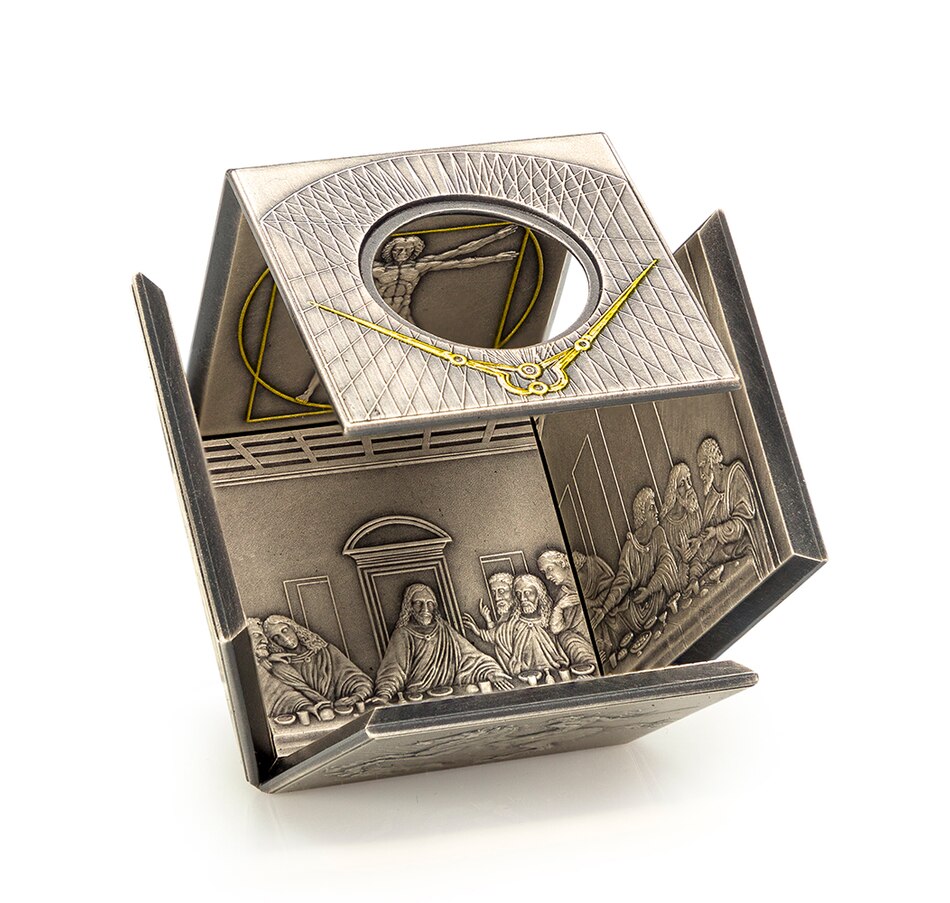
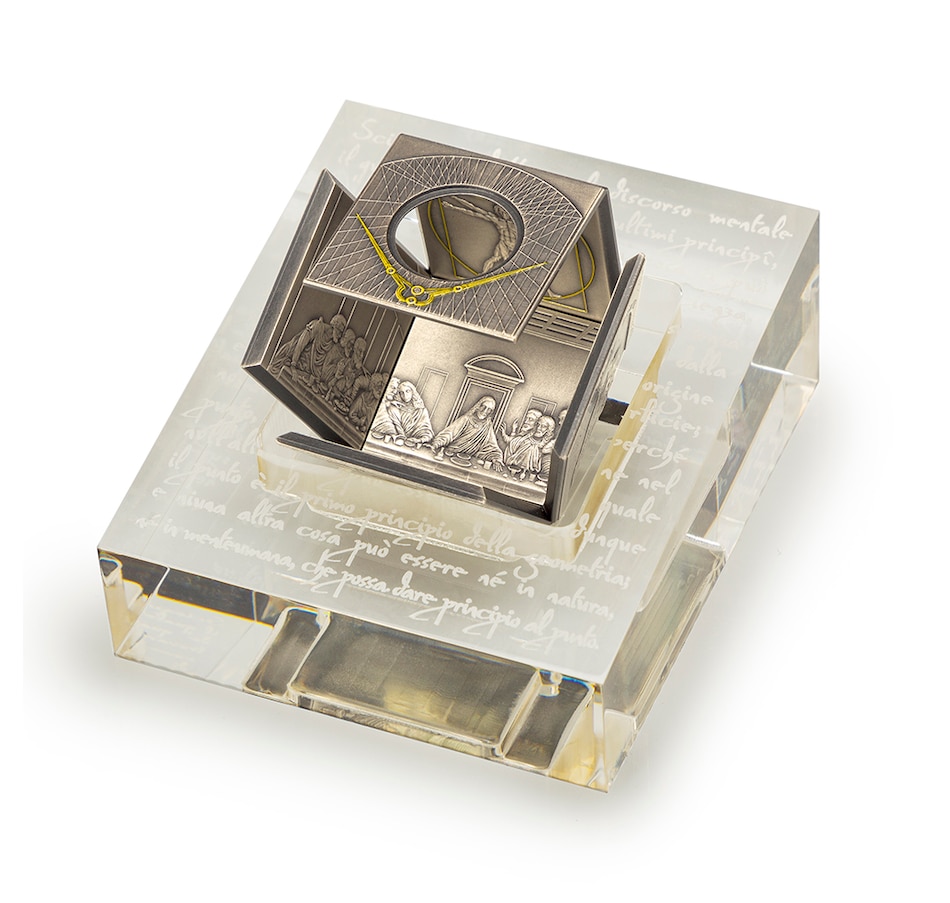
This innovative and fascinating large $25 open-cube-shaped coin presents 12 different surface designs and features various masterpieces of Leonardo da Vinci. The coin weighs 6.5 ounces of fine silver, and has a large size of 45 mm cubed. The exceptional detailing includes a decorative gold-plated frame around each image, and an antique finish over the full coin. The coin is housed in a double-sided presentation box which includes an acrylic stand. This is an extremely complicated coin to produce, and the mintage is limited to just 500 coins worldwide. The coin is legal tender in Niue, and includes an effigy of Queen Elizabeth II.
• Mintage: 500
• Dimensions: 45 mm x 45 mm x 45 mm
• Weight 6.5 oz
On the Inside of Cube Coin
Vitruvian Man ("Le Proporzioni del Corpo Umano Secondo Vitruvio")
This title literally translates to, "The proportions of the human body according to Vitruvius"). This drawing was done in 1490. It is accompanied by notes based on the work of the architect Vitruvius, in which he determined that the ideal body should be eight heads high. The drawing, in pen and ink on paper, depicts a man in two superimposed positions with his arms and legs apart and inscribed in a circle and square.
The Last Supper
This mural painting is from the late 15th century. Due to many environmental factors, as well as methods used while painting, and intentional damage, today, very little of the remains of this painting despite numerous attempts to restore it. It is one of the world's most famous paintings.
Portrait of a Man in Red Chalk
This portrait, widely thought to be a self-portrait, was done in 1512 using red chalk, when Leonardo da Vinci was 50 and living in France. This work resides in the Biblioteca Reale, Turin. The portrait perfectly fits the role in which da Vinci had cast himself, that is, as an old man with a long white beard, severe eyes shaded under bushy brows—as was the traditional type for representing philosophers, prophets and also God. Nobody suggests that da Vinci has drawn himself consciously in the semblance as God, but we must remember his claim that the painter contends with nature and that painting is related to God.
On the Outside of Cube Coin
Mona Lisa
The painting, thought to be a portrait of Lisa Gherardini, wife of Francesco del Giocondo, believed to have been painted between 1503 and 1506. It was acquired by the King of France (Francis I), and is now on permanent display at the Louvre Museum in Paris. The subject's expression, which is frequently described as enigmatic, has novel qualities that have contributed to the continuing fascination with the work. It is the piece that is most written and sung about.
Aerial Screw
Da Vinci's sketches were from the 15th century, and it is believed that they were the predecessor to the modern day flying machine. Although he never actually built and tested it, his notes and drawings mapped out exactly how the device would operate.
Gran Cavallo
This sculpture, also known as Leonardo's Horse, was commissioned in 1482 by the Duke of Milan, however it was not completed. It was intended to be the largest equestrian statue in the world. Da Vinci had done much preparatory work for it, but produced only a clay model, which was destroyed by French soldiers when they invaded in 1499, and thus interrupted the project. About five centuries later, da Vinci's surviving design materials were used as the basis for sculptures intended to bring the project to completion.
Lady with an Ermine
This painting is from around 1489 to 1490 and the subject of the portrait is Cecilia Gallerni, painted during the time when she was the mistress of the Duke of Milan (Ludovico Sforza), and da Vinci was in his service.
Leonardo da Vinci (1452–1519)
Leonardo da Vinci was one of the most acclaimed artists of the Renaissance, and was most famous for the way he used light in his paintings. Not only was he a painter but also an architect and inventor, and had a passion for all things scientific. Largely self-educated, he filled dozens of notebooks with sketches of many inventions, observations and theories on anatomy and aeronautics, however many of these concepts were difficult to interpret. As a result, although known as a truly great artist, many of his fellow artists did not fully appreciate his genius, which was a combination of his imagination, intellect and artistry that allowed him to create inventions such as the helicopter, bicycle and airplane based on the flying capabilities of a bat (at least what he put onto paper).
Includes:
• $25 Fine Silver 2015 Cube Coin Leonardo da Vinci
Warranty Information:
This product comes with a 30-day warranty through TSC.
• Mintage: 500
• Dimensions: 45 mm x 45 mm x 45 mm
• Weight 6.5 oz
On the Inside of Cube Coin
Vitruvian Man ("Le Proporzioni del Corpo Umano Secondo Vitruvio")
This title literally translates to, "The proportions of the human body according to Vitruvius"). This drawing was done in 1490. It is accompanied by notes based on the work of the architect Vitruvius, in which he determined that the ideal body should be eight heads high. The drawing, in pen and ink on paper, depicts a man in two superimposed positions with his arms and legs apart and inscribed in a circle and square.
The Last Supper
This mural painting is from the late 15th century. Due to many environmental factors, as well as methods used while painting, and intentional damage, today, very little of the remains of this painting despite numerous attempts to restore it. It is one of the world's most famous paintings.
Portrait of a Man in Red Chalk
This portrait, widely thought to be a self-portrait, was done in 1512 using red chalk, when Leonardo da Vinci was 50 and living in France. This work resides in the Biblioteca Reale, Turin. The portrait perfectly fits the role in which da Vinci had cast himself, that is, as an old man with a long white beard, severe eyes shaded under bushy brows—as was the traditional type for representing philosophers, prophets and also God. Nobody suggests that da Vinci has drawn himself consciously in the semblance as God, but we must remember his claim that the painter contends with nature and that painting is related to God.
On the Outside of Cube Coin
Mona Lisa
The painting, thought to be a portrait of Lisa Gherardini, wife of Francesco del Giocondo, believed to have been painted between 1503 and 1506. It was acquired by the King of France (Francis I), and is now on permanent display at the Louvre Museum in Paris. The subject's expression, which is frequently described as enigmatic, has novel qualities that have contributed to the continuing fascination with the work. It is the piece that is most written and sung about.
Aerial Screw
Da Vinci's sketches were from the 15th century, and it is believed that they were the predecessor to the modern day flying machine. Although he never actually built and tested it, his notes and drawings mapped out exactly how the device would operate.
Gran Cavallo
This sculpture, also known as Leonardo's Horse, was commissioned in 1482 by the Duke of Milan, however it was not completed. It was intended to be the largest equestrian statue in the world. Da Vinci had done much preparatory work for it, but produced only a clay model, which was destroyed by French soldiers when they invaded in 1499, and thus interrupted the project. About five centuries later, da Vinci's surviving design materials were used as the basis for sculptures intended to bring the project to completion.
Lady with an Ermine
This painting is from around 1489 to 1490 and the subject of the portrait is Cecilia Gallerni, painted during the time when she was the mistress of the Duke of Milan (Ludovico Sforza), and da Vinci was in his service.
Leonardo da Vinci (1452–1519)
Leonardo da Vinci was one of the most acclaimed artists of the Renaissance, and was most famous for the way he used light in his paintings. Not only was he a painter but also an architect and inventor, and had a passion for all things scientific. Largely self-educated, he filled dozens of notebooks with sketches of many inventions, observations and theories on anatomy and aeronautics, however many of these concepts were difficult to interpret. As a result, although known as a truly great artist, many of his fellow artists did not fully appreciate his genius, which was a combination of his imagination, intellect and artistry that allowed him to create inventions such as the helicopter, bicycle and airplane based on the flying capabilities of a bat (at least what he put onto paper).
Includes:
• $25 Fine Silver 2015 Cube Coin Leonardo da Vinci
Warranty Information:
This product comes with a 30-day warranty through TSC.