

8-Piece $20 Transportation Themed Silver Coins (Sea, Rail, Land, and Air)
712-845
$899.95
Free Shipping
or
12 Payments of $74.99
with
Product Overview
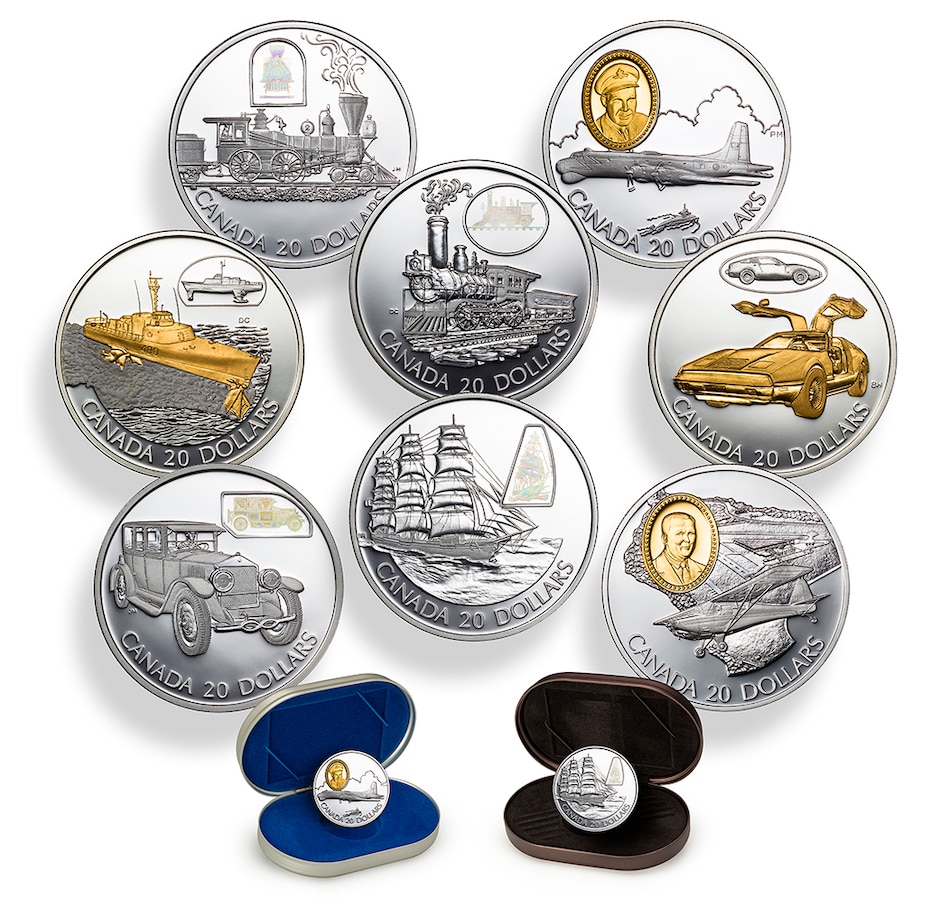
This collection includes eight different and highly sought after classic $20 one ounce sterling silver coins issued by the Royal Canadian Mint from 1990 to 2003. Each coin features a Canadian transportation theme, with two coins each, representing sea, rail, land, and air. Each coin has a limited collector mintage, and contains about an ounce of sterling silver. The coins are enhanced with either selective gold plating or a holographic element.
While the collection is guaranteed to include two issues each from sea, rail, land, and air, the specific coins in each collection may vary, as outlined below.
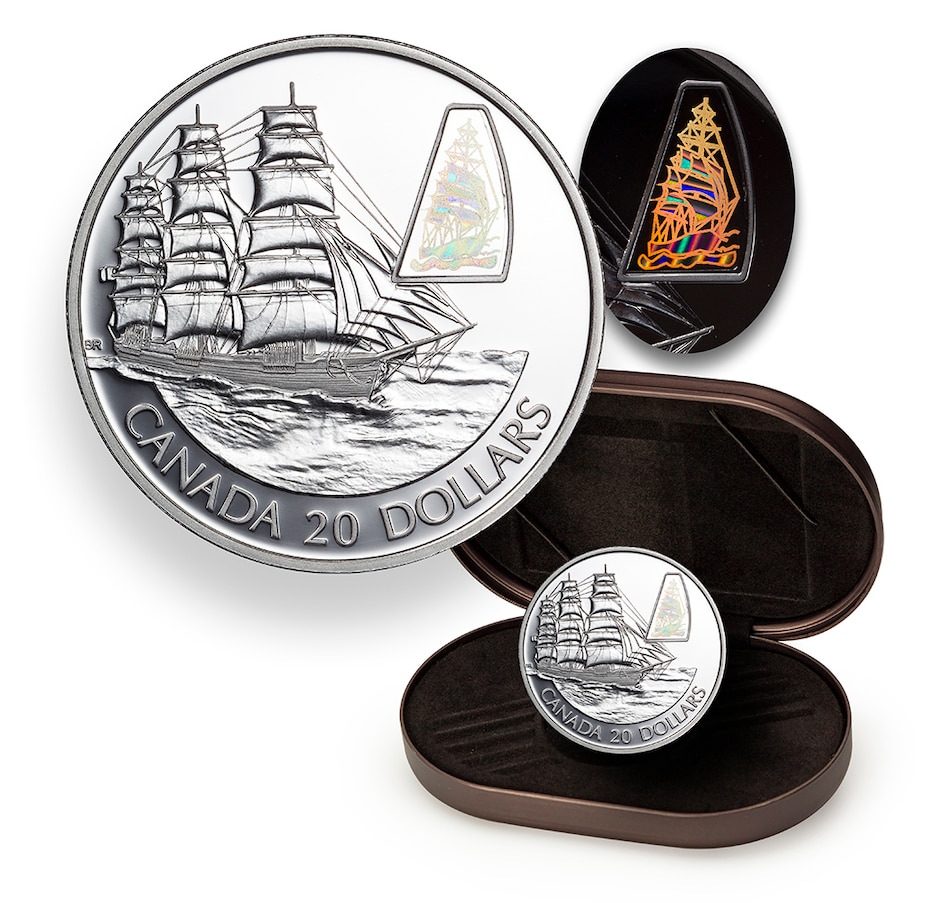
$20 Sea Holographic Coin– William Lawrence 2002
The William D. Lawrence measured 262 feet in length, making it the largest ship ever built in the Maritimes. It is a three-masted square-rigger that could reached speeds of 14 knots.
$20 Sea Holographic Coin– The Bras d’Or 2003
This coin features the hydrofoil designed by deHavilland in 1967, that could surf across water at high speed to intercept any nuclear-powered submarines. A change in defence policy forced the Bras d'Or into retirement without ever having entered military service. The coin uses both selective gold plating and a holographic cameo of the ship.
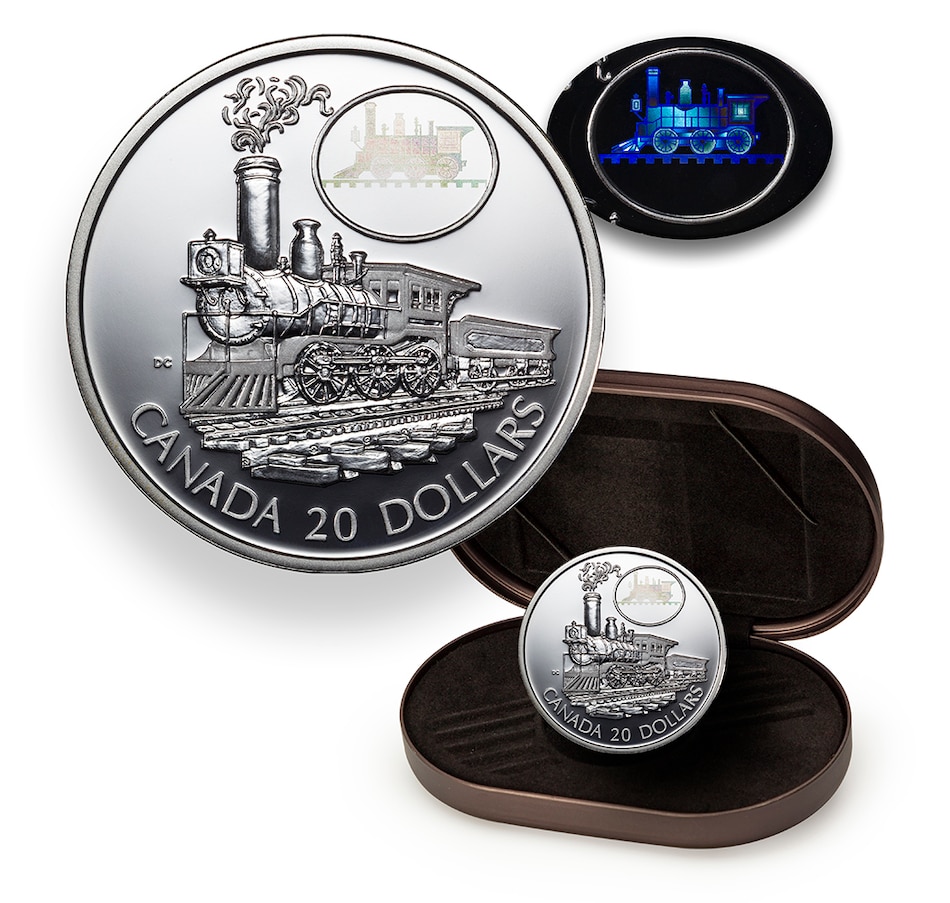
$20 Train Holographic Coin– The Toronto 2000
On April 16, 1853, the "Toronto", was completed at Good's foundry. This was the first steam locomotive built in Canada, and probably the first anywhere in the British Empire outside of Great Britain. The 4-4-0 weighed almost 30 tons and was 26 feet in length without her tender.
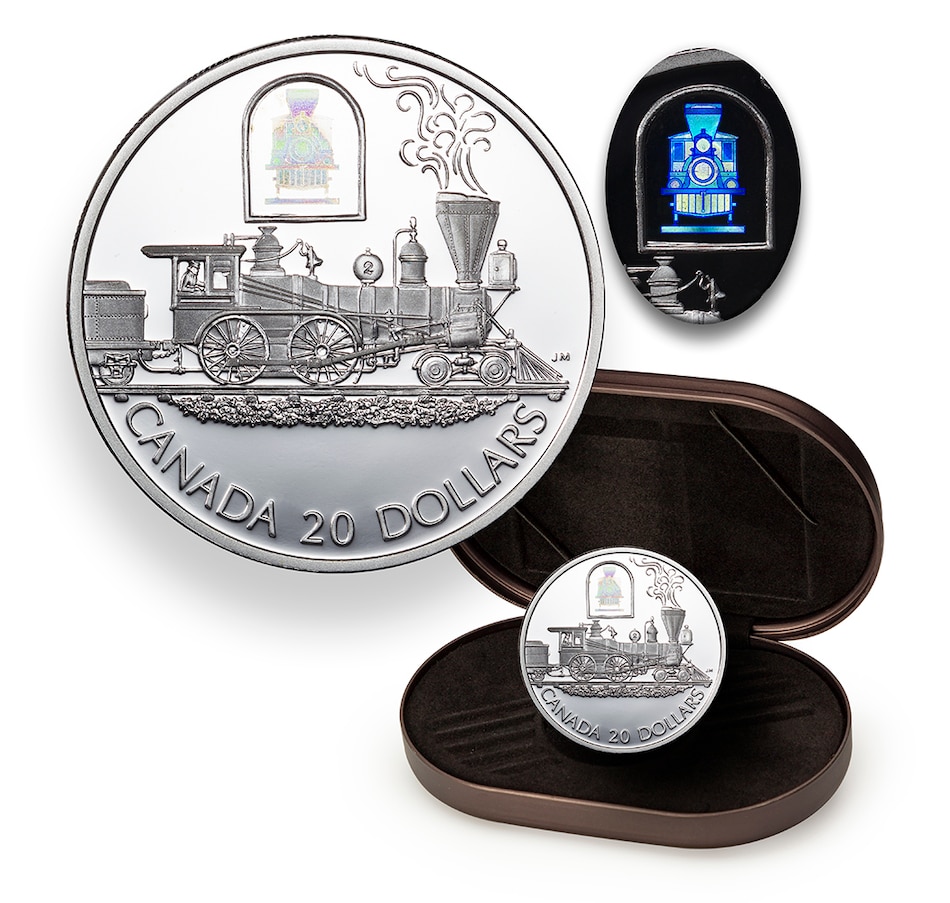
$20 Train Holographic Coin– The Scotia 2001
The Scotia was the first locomotive in Canada to be built with a steel boiler in order to reduce heat loss, and therefore it could generate more power. The Scotia was built in Hamilton, Ontario in 1861.
$20 Automobile Coin– Russell Touring Car 2001 or Grey Dort 2002
The Russell was the first mass-produced Canadian car with an engine and chassis built in Canada (1908). Rather than evolving from a carriage-making company, the Russell was created by the Canada Cycle and Motor Company, popularly known as CCM.
or
The affordable, high quality, Ontario-built Gray-Dort Model 25-SM became one of Canada's most popular cars. Between 1916 and 1924, over 26,000 Gray-Dorts were produced.
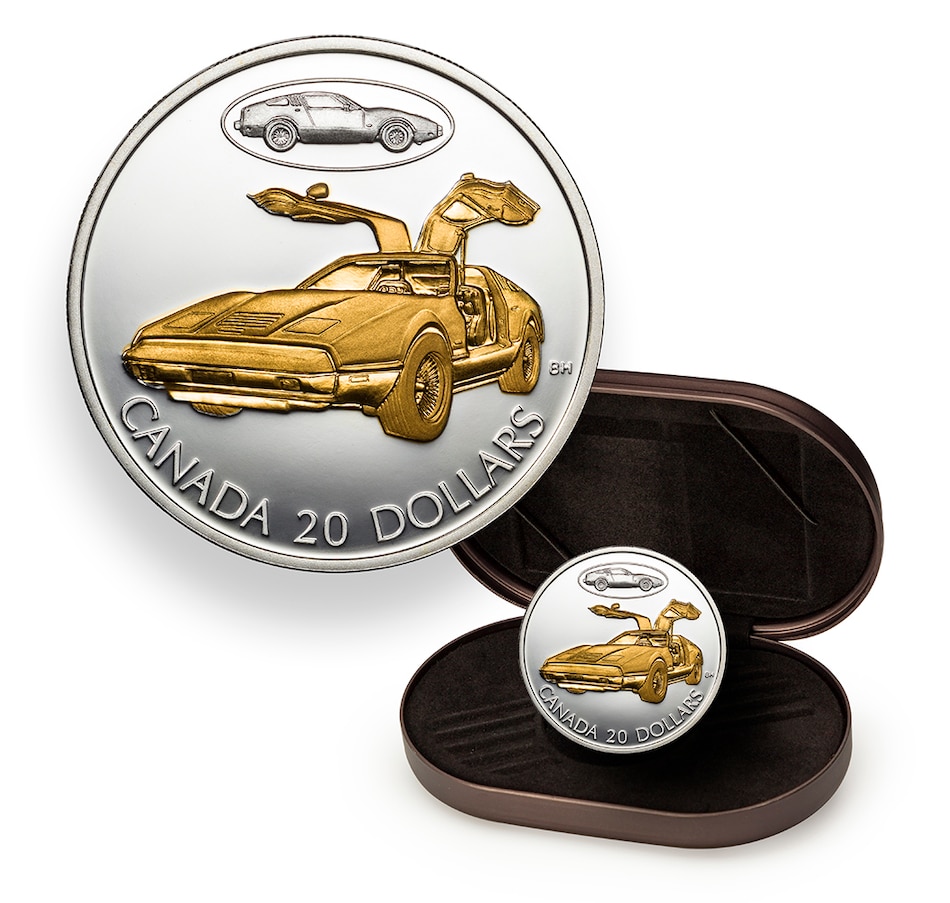
$20 Automobile Coin– Bricklin 2003
During the 1970s, Saint John, New Brunswick, was the automotive capital of the world as it began producing the gull-winged wonder known as the Bricklin. Looking very much like Italy's Maserati (but at a fraction of the cost), the Bricklin promised to deliver performance and safety innovations that were years ahead of its time. Plans were ambitious but short-lived; Bricklin Canada closed its doors after producing just 2,854 cars.
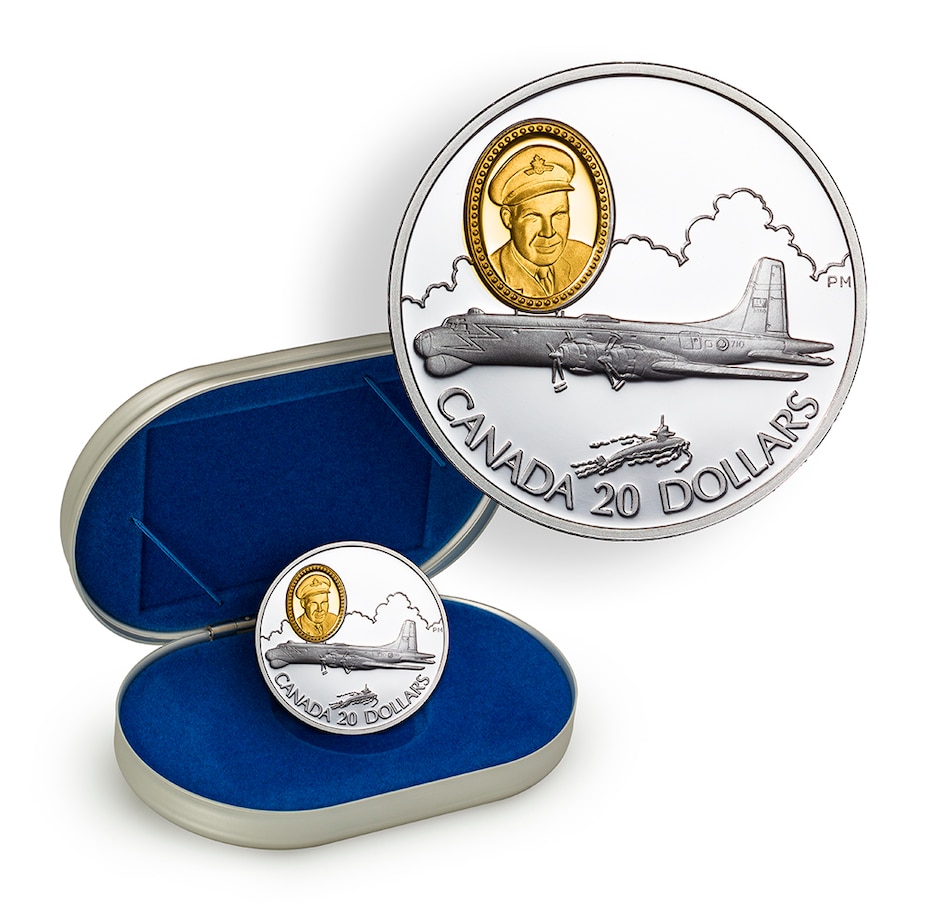
$20 Aviation Coin– deHavilland Beaver 1991 or CP-107 Argus 1998
The Beaver was designed and manufactured by de Havilland Aircraft of Canada after extensive market research to determine the needs of bush pilots and operators. It first flew in 1947. Its rugged, simple, all-metal construction and STOL performance made it ideal as a utility transport for bush flying, military operations, and agricultural work from polar to tropical climates.
or
The CP-107 Argus first took to the skies in 1957 and entered service with the Royal Canadian Air Force the following year. It was one of the most sophisticated combat aircraft of its time, as it had an advanced navigation system. It was powered by four huge piston engines. Its high power and maximum fuel economy gave it long range and endurance, with a strengthened airframe it could withstand low-level flying.
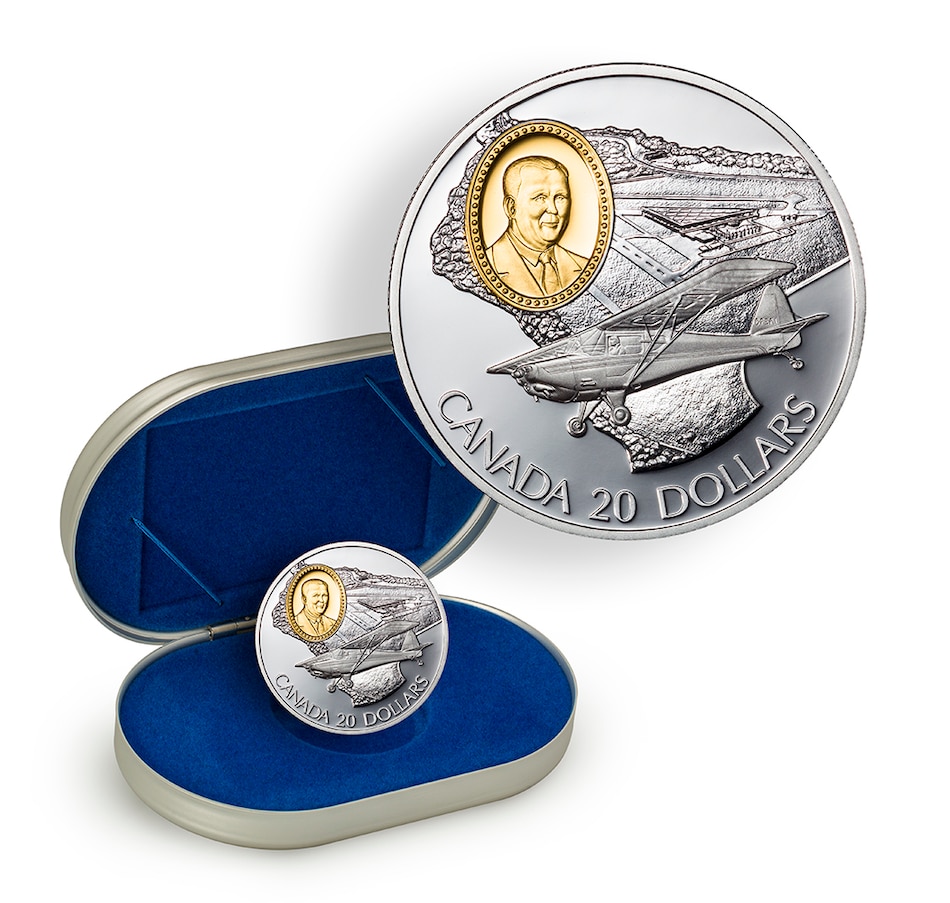
$20 Aviation Coin– DHC-1 Chipmunk or Fleet 80 Canuck
After its contribution to the Second World War, de Havilland Aircraft of Canada Ltd. looked towards the future. The company's first new design, the DHC-1 Chipmunk, was popular in military and civil use. The agile pilot trainer was ideally suited for military flight instruction. A tandem seat aircraft, the Chipmunk became the first Canadian aircraft design to be built in other countries.
or
In 1945, the Fleet Aircraft Ltd. of Fort Erie, Ontario purchased the prototype and the rights of the Noury N-75, designed by J. Omer (Bob) Noury. Fleet renamed the aircraft the Fleet 80 Canuck, and 225 were built. The side-by-side seating of the Canuck proved to be ideally suited for training pilots. The Canuck also served a number of transport roles in northern parts of Canada.
Includes:
• 8-Piece $20 Transportation Themed Silver Coins
Warranty Information:
This product comes with a 30-day warranty through TSC.
While the collection is guaranteed to include two issues each from sea, rail, land, and air, the specific coins in each collection may vary, as outlined below.
$20 Sea Holographic Coin– William Lawrence 2002
The William D. Lawrence measured 262 feet in length, making it the largest ship ever built in the Maritimes. It is a three-masted square-rigger that could reached speeds of 14 knots.
$20 Sea Holographic Coin– The Bras d’Or 2003
This coin features the hydrofoil designed by deHavilland in 1967, that could surf across water at high speed to intercept any nuclear-powered submarines. A change in defence policy forced the Bras d'Or into retirement without ever having entered military service. The coin uses both selective gold plating and a holographic cameo of the ship.
$20 Train Holographic Coin– The Toronto 2000
On April 16, 1853, the "Toronto", was completed at Good's foundry. This was the first steam locomotive built in Canada, and probably the first anywhere in the British Empire outside of Great Britain. The 4-4-0 weighed almost 30 tons and was 26 feet in length without her tender.
$20 Train Holographic Coin– The Scotia 2001
The Scotia was the first locomotive in Canada to be built with a steel boiler in order to reduce heat loss, and therefore it could generate more power. The Scotia was built in Hamilton, Ontario in 1861.
$20 Automobile Coin– Russell Touring Car 2001 or Grey Dort 2002
The Russell was the first mass-produced Canadian car with an engine and chassis built in Canada (1908). Rather than evolving from a carriage-making company, the Russell was created by the Canada Cycle and Motor Company, popularly known as CCM.
or
The affordable, high quality, Ontario-built Gray-Dort Model 25-SM became one of Canada's most popular cars. Between 1916 and 1924, over 26,000 Gray-Dorts were produced.
$20 Automobile Coin– Bricklin 2003
During the 1970s, Saint John, New Brunswick, was the automotive capital of the world as it began producing the gull-winged wonder known as the Bricklin. Looking very much like Italy's Maserati (but at a fraction of the cost), the Bricklin promised to deliver performance and safety innovations that were years ahead of its time. Plans were ambitious but short-lived; Bricklin Canada closed its doors after producing just 2,854 cars.
$20 Aviation Coin– deHavilland Beaver 1991 or CP-107 Argus 1998
The Beaver was designed and manufactured by de Havilland Aircraft of Canada after extensive market research to determine the needs of bush pilots and operators. It first flew in 1947. Its rugged, simple, all-metal construction and STOL performance made it ideal as a utility transport for bush flying, military operations, and agricultural work from polar to tropical climates.
or
The CP-107 Argus first took to the skies in 1957 and entered service with the Royal Canadian Air Force the following year. It was one of the most sophisticated combat aircraft of its time, as it had an advanced navigation system. It was powered by four huge piston engines. Its high power and maximum fuel economy gave it long range and endurance, with a strengthened airframe it could withstand low-level flying.
$20 Aviation Coin– DHC-1 Chipmunk or Fleet 80 Canuck
After its contribution to the Second World War, de Havilland Aircraft of Canada Ltd. looked towards the future. The company's first new design, the DHC-1 Chipmunk, was popular in military and civil use. The agile pilot trainer was ideally suited for military flight instruction. A tandem seat aircraft, the Chipmunk became the first Canadian aircraft design to be built in other countries.
or
In 1945, the Fleet Aircraft Ltd. of Fort Erie, Ontario purchased the prototype and the rights of the Noury N-75, designed by J. Omer (Bob) Noury. Fleet renamed the aircraft the Fleet 80 Canuck, and 225 were built. The side-by-side seating of the Canuck proved to be ideally suited for training pilots. The Canuck also served a number of transport roles in northern parts of Canada.
Includes:
• 8-Piece $20 Transportation Themed Silver Coins
Warranty Information:
This product comes with a 30-day warranty through TSC.