Ancient Greek Coin Ring Set in 14-Karat Gold and Sterling Silver Featuring High-Grade Silver Lion Hemidrachm Circa 480-350 BCE
559-938
$549.95
Free Shipping
or
9 Payments of $61.10
with
Product Overview
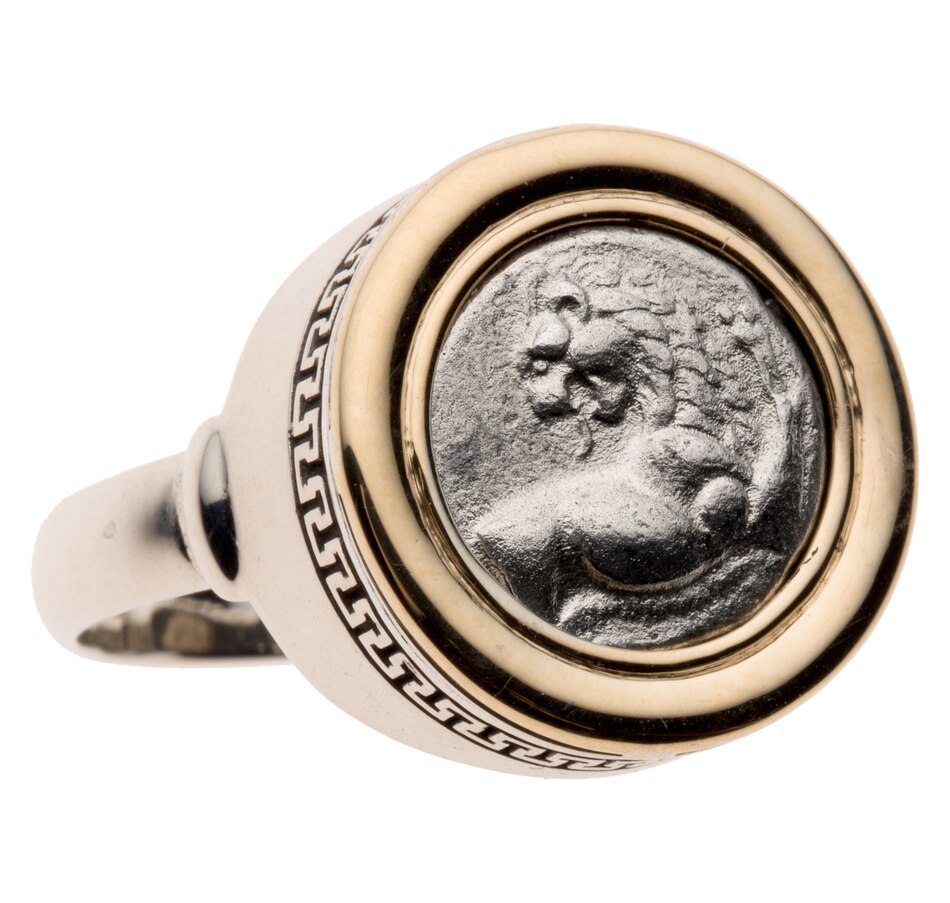
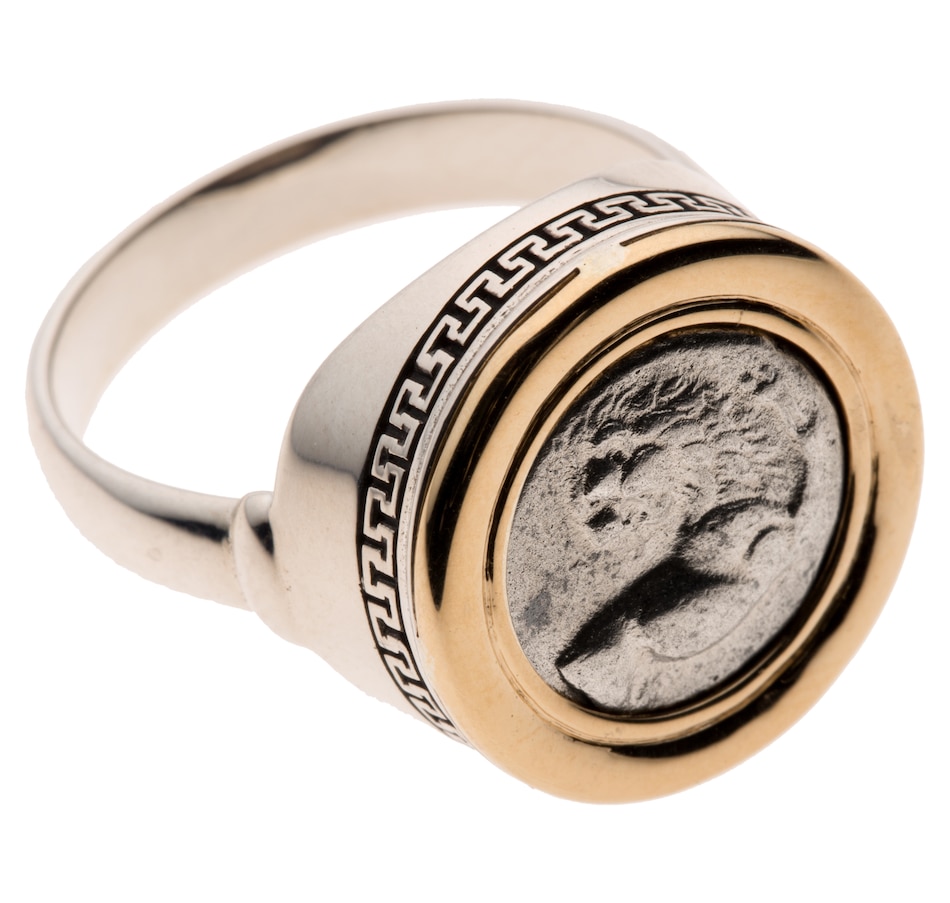
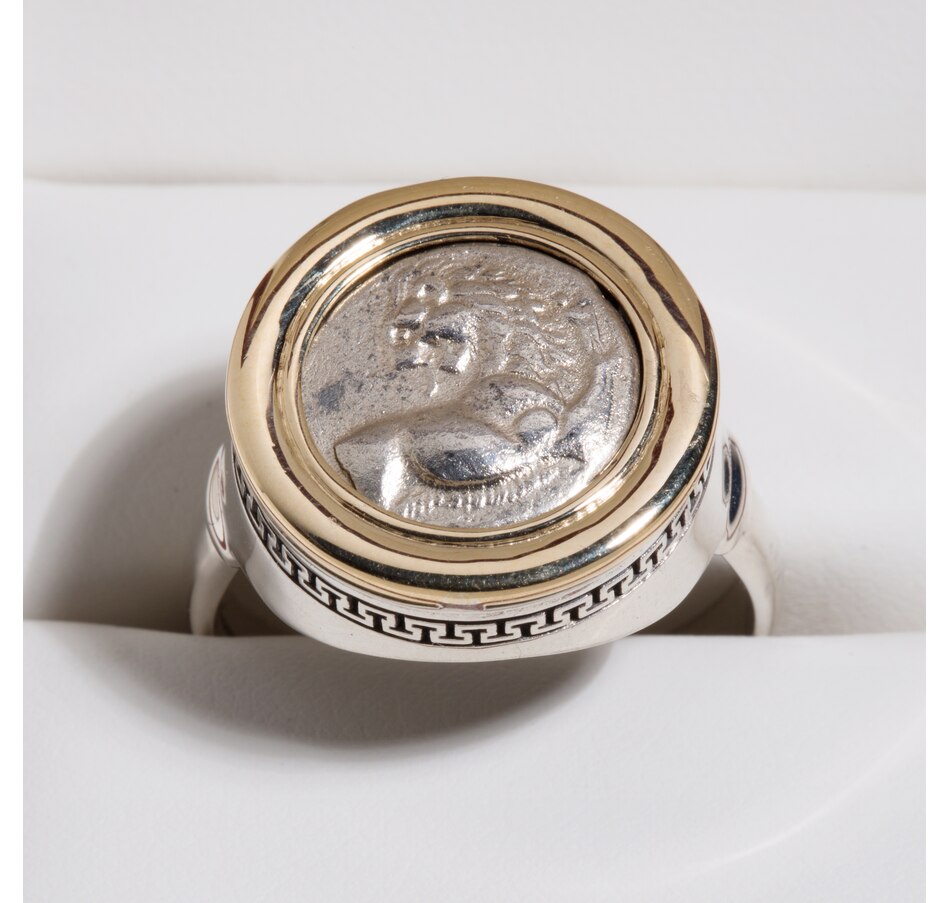
This high-quality Numari-branded 14-karat gold and sterling silver ring is both a beautiful piece of jewellery and a tangible connection to the time of ancient Greece. The ring features a genuine silver coin struck in ancient Greece more than 2,350 years ago. The ring was created to bring together antiquity and modern design, with a solid 14-karat gold bezel surrounding the coin and the balance of the ring set in sterling silver. As in all Numari jewellery, the coin has been set in a way that leaves it undamaged.
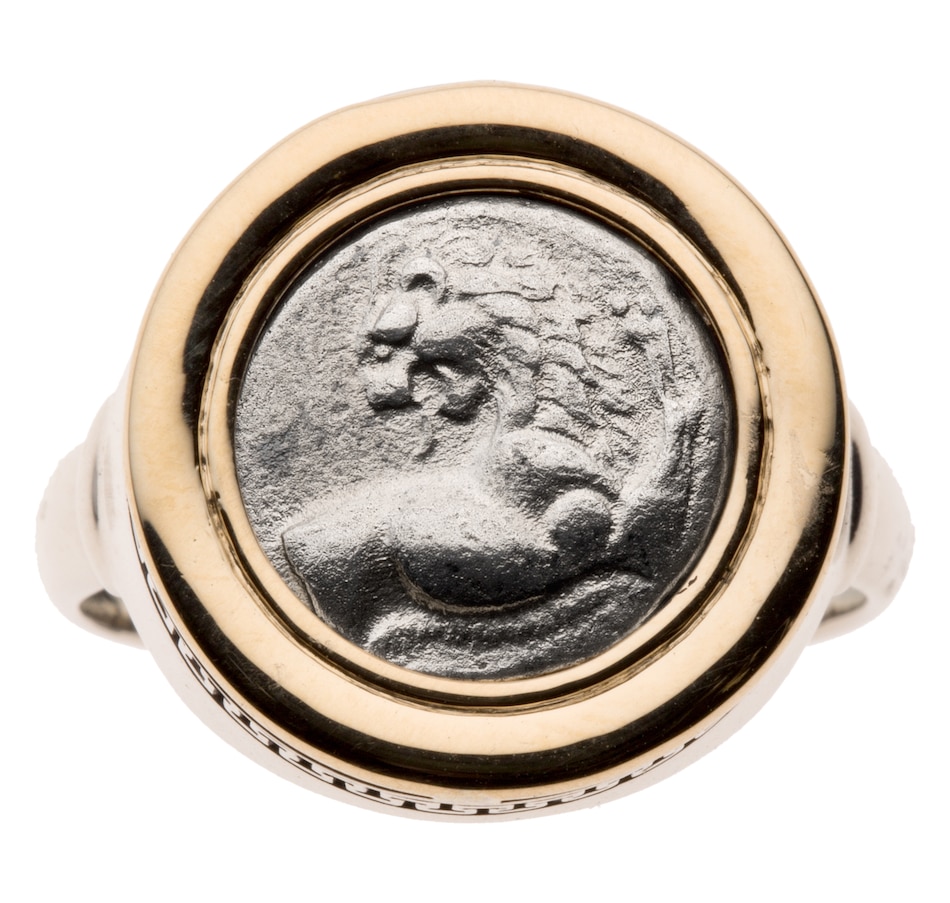
The ancient Greek silver hemidrachm (half drachm) set into this ring was minted in Cherronesos, Thrace between 480 and 350 BCE. The front design features the forepart of a lion, looking back with raised paws. On the reverse is an incuse square divided into four parts, two of which contain a symbol and a pellet. Despite the small size of the coin, this unusually high-grade specimen shows intricate detail, and still appears today as it would have when it was first in circulation more than 2,350 years ago.
This type of hemidrachm was used in ancient times to trade with the cities along the coast of the Black Sea. Cherronesos was under the control of Athens for most of the period when these coins were issued. It would later be taken over by Philip II (father of Alexander the Great) in 338 BCE, Pergamon in 189 BCE, and Rome in 133 BCE. The area was later controlled by Byzantium, then the Ottoman Turks.
At the time of this coin's mintage, the Greek world was approaching its greatest sphere of power and influence. The Persians under King Xerxes had been defeated at the Battles of Salamis (480 BCE) and Plataea (479 BCE), and with these victories the Greeks became the masters of the Western world. With this strength, commerce flourished and the recent invention of standard coinage replaced the inefficient old systems of barter.
Animals were the most common images to appear on early Greek coins, with lions being one of the most striking designs. At the time this coin was issued, wild lions still roamed throughout Greece and most of Europe. The lion on the coin can be seen as a symbol of power and strength, both of the lion itself and of the rulers issuing the coin. Hunting lions on horseback was seen at the time as a noble pursuit, and was a favourite pastime of Alexander the Great.
• Metal: solid 14 karat gold and sterling silver
• Coin: silver (nearly pure)
• Issued by: ancient Greece; Thrace
• Denomination: hemidrachm
• Front design: front of a lion, looking back with raised paws
• Back design: incuse square with symbols
• Age: over 2,350 to 2,500 years old; issued 480 to 350 BCE
• Condition: premium nearly "as struck" quality
• Weight: approximately 9 grams (coin weighs approximately 2 grams)
• Measures approximately 14 mm in diameter
• Authenticity: guaranteed genuine original coin
• Branding: Numari fine coin jewellery
Includes:
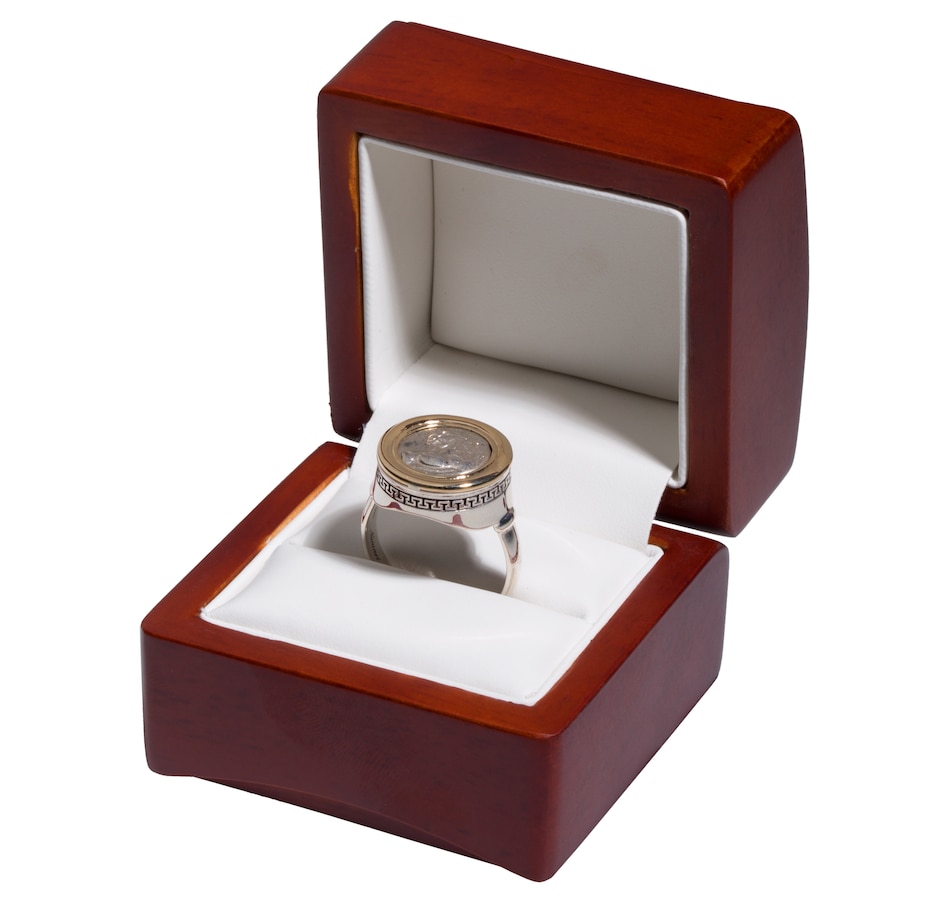
• 14-Karat Gold and Sterling Silver Ring Featuring Genuine Museum-Quality Ancient Greek Silver Lion Coin, Circa 480-350 BCE
The ancient Greek silver hemidrachm (half drachm) set into this ring was minted in Cherronesos, Thrace between 480 and 350 BCE. The front design features the forepart of a lion, looking back with raised paws. On the reverse is an incuse square divided into four parts, two of which contain a symbol and a pellet. Despite the small size of the coin, this unusually high-grade specimen shows intricate detail, and still appears today as it would have when it was first in circulation more than 2,350 years ago.
This type of hemidrachm was used in ancient times to trade with the cities along the coast of the Black Sea. Cherronesos was under the control of Athens for most of the period when these coins were issued. It would later be taken over by Philip II (father of Alexander the Great) in 338 BCE, Pergamon in 189 BCE, and Rome in 133 BCE. The area was later controlled by Byzantium, then the Ottoman Turks.
At the time of this coin's mintage, the Greek world was approaching its greatest sphere of power and influence. The Persians under King Xerxes had been defeated at the Battles of Salamis (480 BCE) and Plataea (479 BCE), and with these victories the Greeks became the masters of the Western world. With this strength, commerce flourished and the recent invention of standard coinage replaced the inefficient old systems of barter.
Animals were the most common images to appear on early Greek coins, with lions being one of the most striking designs. At the time this coin was issued, wild lions still roamed throughout Greece and most of Europe. The lion on the coin can be seen as a symbol of power and strength, both of the lion itself and of the rulers issuing the coin. Hunting lions on horseback was seen at the time as a noble pursuit, and was a favourite pastime of Alexander the Great.
• Metal: solid 14 karat gold and sterling silver
• Coin: silver (nearly pure)
• Issued by: ancient Greece; Thrace
• Denomination: hemidrachm
• Front design: front of a lion, looking back with raised paws
• Back design: incuse square with symbols
• Age: over 2,350 to 2,500 years old; issued 480 to 350 BCE
• Condition: premium nearly "as struck" quality
• Weight: approximately 9 grams (coin weighs approximately 2 grams)
• Measures approximately 14 mm in diameter
• Authenticity: guaranteed genuine original coin
• Branding: Numari fine coin jewellery
Includes:
• 14-Karat Gold and Sterling Silver Ring Featuring Genuine Museum-Quality Ancient Greek Silver Lion Coin, Circa 480-350 BCE