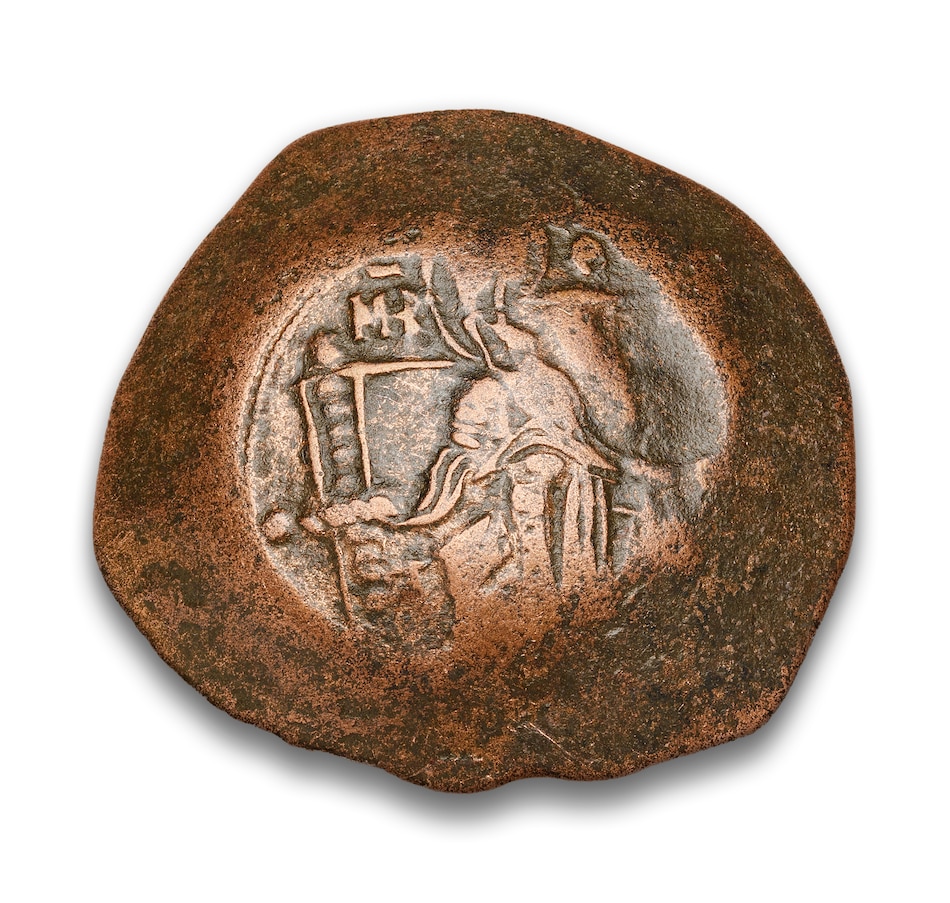
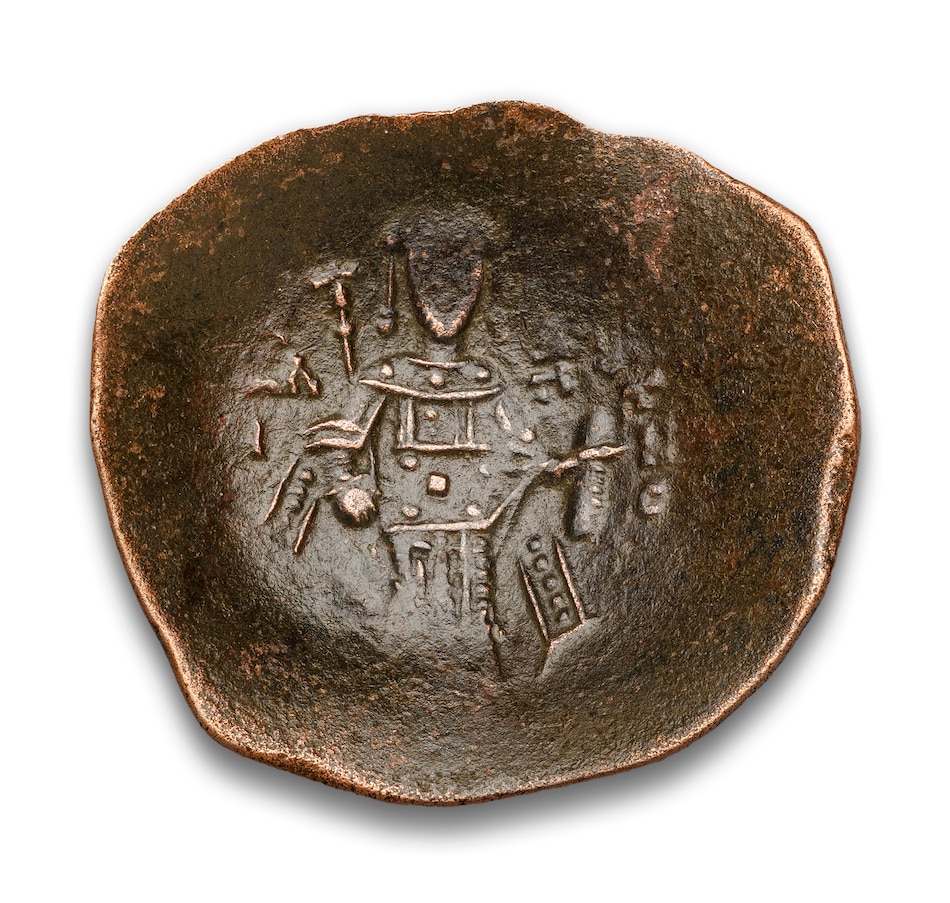
Byzantine Empire Bronze Scyphate, 11th–13th Century
629-550
$38.88
Was
$54.95
Shipping: $9.99
Savings: $16.07
or
12 Payments of $3.24
with
Product Overview
This original Byzantine bronze scyphate coin is one of the most unusual and interesting coins of late antiquity, dating from the 11th to 13th century. After the fall of the Roman empire in the fifth century, most of the eastern part of what had been the Roman empire came under the control of Byzantine rulers based in the empire's capital at Constantinople. Over time the empire became more fragmented and reduced in size, until the fall of Constantinople to the Ottoman empire in 1453. By 1461, that last of the Byzantine states had fallen, and the Byzantine empire would become a part of the long transition of European rule.
While the ancient Greeks and Romans often produced elegant and highly detailed coins with intricate designs featuring gods, the emperor or historic conquests, the coinage of the Byzantine empire was typically much cruder and usually featured religious motifs. This is especially the case of the coins produced during the late middle ages, when Christianity was the dominant force in daily life and even in commerce.
One of the most interesting of the Byzantine bronze coins of this era was the scyphate, which was minted in a cup shape with images of Christ, the Virgin Mary and the emperor. These were widely issued during the reigns of Alexios I Komnenos (1081–1118), John II Komnenos (1118–1143), Manuel I Komnenos (1143–1180), Alexios II Komnenos (1180–1183), Andronikos I Komnenos (1183–1185), Isaac II Angelos (1185–1195), Alexios III Angelos (1195–1203), and Isaac II Angelos (1203–1204). They also continued to be issued under the crusader kings of Constantinople from 1204 to 1261.
It is generally believed that the cup shape was introduced so that the coins could be made thin (and thus more impressive looking) while also keeping them strong and not easily susceptible to heavy wear (at least on the interior).
• A certificate of authenticity with historical information about the coin is included
Includes:
• Byzantine Empire Bronze Scyphate, 11th to 13th Century
While the ancient Greeks and Romans often produced elegant and highly detailed coins with intricate designs featuring gods, the emperor or historic conquests, the coinage of the Byzantine empire was typically much cruder and usually featured religious motifs. This is especially the case of the coins produced during the late middle ages, when Christianity was the dominant force in daily life and even in commerce.
One of the most interesting of the Byzantine bronze coins of this era was the scyphate, which was minted in a cup shape with images of Christ, the Virgin Mary and the emperor. These were widely issued during the reigns of Alexios I Komnenos (1081–1118), John II Komnenos (1118–1143), Manuel I Komnenos (1143–1180), Alexios II Komnenos (1180–1183), Andronikos I Komnenos (1183–1185), Isaac II Angelos (1185–1195), Alexios III Angelos (1195–1203), and Isaac II Angelos (1203–1204). They also continued to be issued under the crusader kings of Constantinople from 1204 to 1261.
It is generally believed that the cup shape was introduced so that the coins could be made thin (and thus more impressive looking) while also keeping them strong and not easily susceptible to heavy wear (at least on the interior).
• A certificate of authenticity with historical information about the coin is included
Includes:
• Byzantine Empire Bronze Scyphate, 11th to 13th Century