
Set of Six Ancient Roman Bronze Coins of the Constantine Dynasty (293-361 CE)
712-691
$249.95
Free Shipping
or
12 Payments of $20.82
with
Product Overview
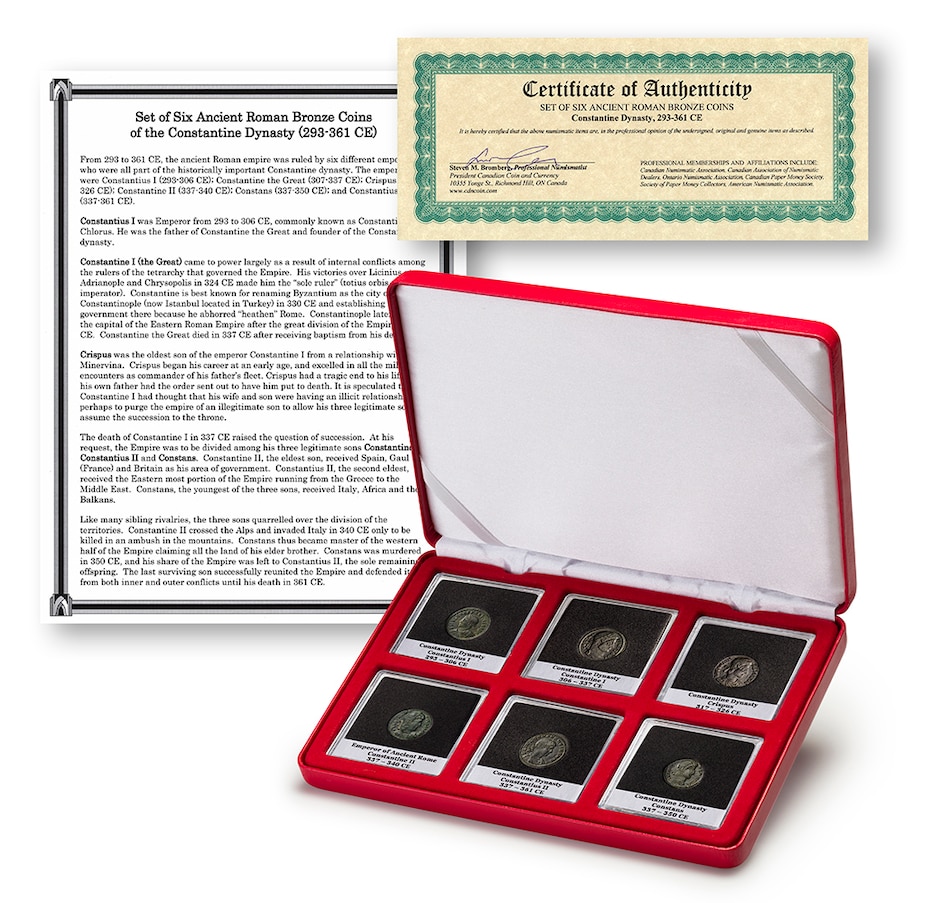
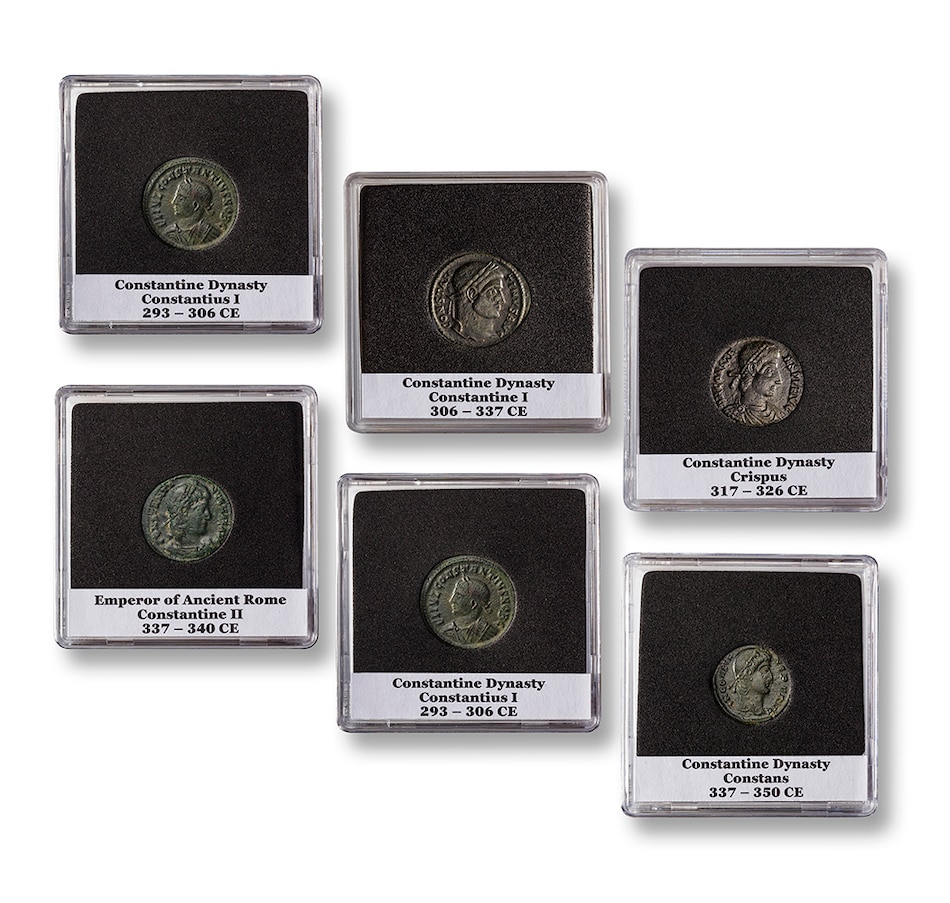
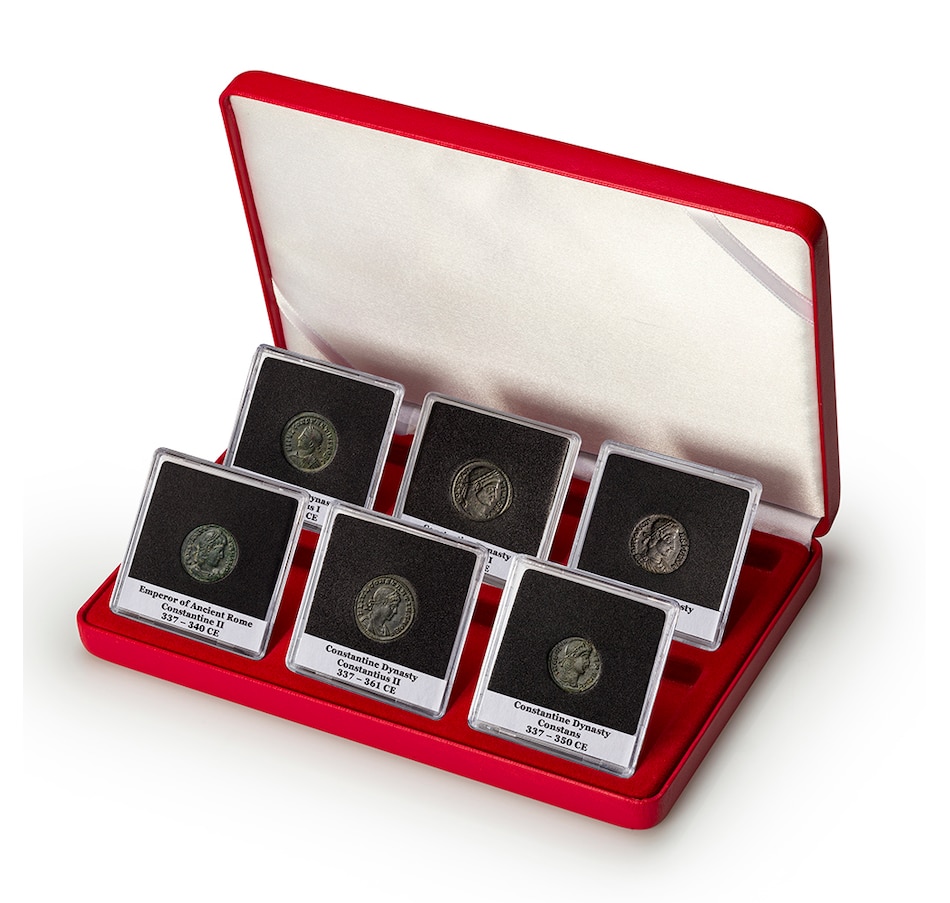
From 293 to 361 CE, the ancient Roman empire was ruled by six different emperors who were all part of the historically important Constantine dynasty. This collection includes six genuine premium-quality bronze coins, with each featuring one of the following emperors: Constantius I (293–306 CE), Constantine the Great (307–337 CE), Crispus (317–326 CE), Constantine II (337–340 CE), Constans (337–350 CE), or Constantius II (337–361 CE). The coins range from 1,656 to 1,724 years old, and together tell a fascinating story of the development of Western civilization and the rise of Christianity, as well as the story of power, deceit and family rivalries.
Constantius I
Constantius I was the Roman Emperor from 293 to 306 CE, and was commonly known as Constantius Chlorus. He was the father of Constantine the Great and founder of the Constantine Dynasty.
Constantine the Great (307–337 CE)
Constantine the Great came to power largely as a result of internal conflicts among the rulers of the tetrarchy that governed the empire. His victories over Licinius at Adrianople and Chrysopolis in 324 CE made him the totius orbis imperator ("sole ruler"). Constantine is best known for renaming Byzantium as the city of Constantinople (now Istanbul located in Turkey) in 330 CE and established his government there because he abhorred "heathen" Rome. Constantinople later became the capital of the Eastern Roman Empire after the great division in 396 CE. Constantine the Great died in 337 after receiving baptism from his deathbed.
Crispus (317–326 CE)
Crispus was the oldest son of the emperor, from a relationship with a woman (Minervina). Crispus began his career at an early age, and excelled in all the military encounters as commander of his father's fleet. Crispus had a tragic end to his life as his own father had the order sent out to have him put to death. It is speculated that Constantine I had thought that his wife and son were having an illicit relationship, or perhaps that it was an attempt to purge the empire of an illegitimate son to allow his three legitimate sons to assume the succession to the throne.
Constantine II (337–340 CE), Constans (337–350 CE), and Constantius II (337–361 CE)
The death of Constantine I in 337 CE raised the question of succession. At his request, the empire was to be divided among his three legitimate sons: Constantine II, Constantius II and Constans. Constantine II, the eldest son, received Spain, Gaul (France) and Britain as his area of government. Constantius II, the second eldest, received the easternmost portion of the empire running from the Greece to the Middle East. Constans received Italy, Africa and the Balkans.
Like many other sibling rivalries, the three sons quarrelled over the division of the territories. Constantine II crossed the Alps and invaded Italy in 340 CE only to be killed in an ambush in the mountains. Constans thus became master of the western half of the empire, claiming all the lands of his elder brother. Constans was murdered in 350 CE and his share of the empire was left to Constantius II. The last surviving son successfully reunited the empire and defended it from both inner and outer conflicts until his death in 361 CE.
Includes:
• Set of Six Ancient Roman Bronze Coins of the Constantine Dynasty, 293–361 CE
Warranty Information:
This product comes with a 30-day warranty through TSC.
Constantius I
Constantius I was the Roman Emperor from 293 to 306 CE, and was commonly known as Constantius Chlorus. He was the father of Constantine the Great and founder of the Constantine Dynasty.
Constantine the Great (307–337 CE)
Constantine the Great came to power largely as a result of internal conflicts among the rulers of the tetrarchy that governed the empire. His victories over Licinius at Adrianople and Chrysopolis in 324 CE made him the totius orbis imperator ("sole ruler"). Constantine is best known for renaming Byzantium as the city of Constantinople (now Istanbul located in Turkey) in 330 CE and established his government there because he abhorred "heathen" Rome. Constantinople later became the capital of the Eastern Roman Empire after the great division in 396 CE. Constantine the Great died in 337 after receiving baptism from his deathbed.
Crispus (317–326 CE)
Crispus was the oldest son of the emperor, from a relationship with a woman (Minervina). Crispus began his career at an early age, and excelled in all the military encounters as commander of his father's fleet. Crispus had a tragic end to his life as his own father had the order sent out to have him put to death. It is speculated that Constantine I had thought that his wife and son were having an illicit relationship, or perhaps that it was an attempt to purge the empire of an illegitimate son to allow his three legitimate sons to assume the succession to the throne.
Constantine II (337–340 CE), Constans (337–350 CE), and Constantius II (337–361 CE)
The death of Constantine I in 337 CE raised the question of succession. At his request, the empire was to be divided among his three legitimate sons: Constantine II, Constantius II and Constans. Constantine II, the eldest son, received Spain, Gaul (France) and Britain as his area of government. Constantius II, the second eldest, received the easternmost portion of the empire running from the Greece to the Middle East. Constans received Italy, Africa and the Balkans.
Like many other sibling rivalries, the three sons quarrelled over the division of the territories. Constantine II crossed the Alps and invaded Italy in 340 CE only to be killed in an ambush in the mountains. Constans thus became master of the western half of the empire, claiming all the lands of his elder brother. Constans was murdered in 350 CE and his share of the empire was left to Constantius II. The last surviving son successfully reunited the empire and defended it from both inner and outer conflicts until his death in 361 CE.
Includes:
• Set of Six Ancient Roman Bronze Coins of the Constantine Dynasty, 293–361 CE
Warranty Information:
This product comes with a 30-day warranty through TSC.