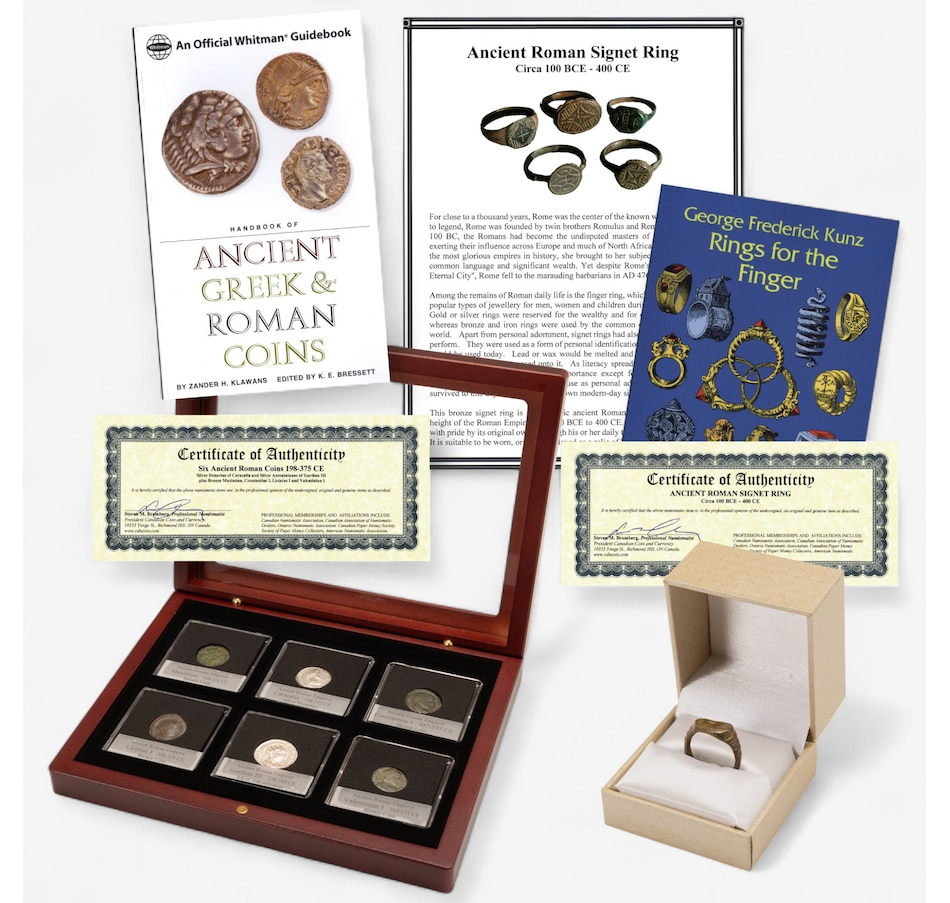

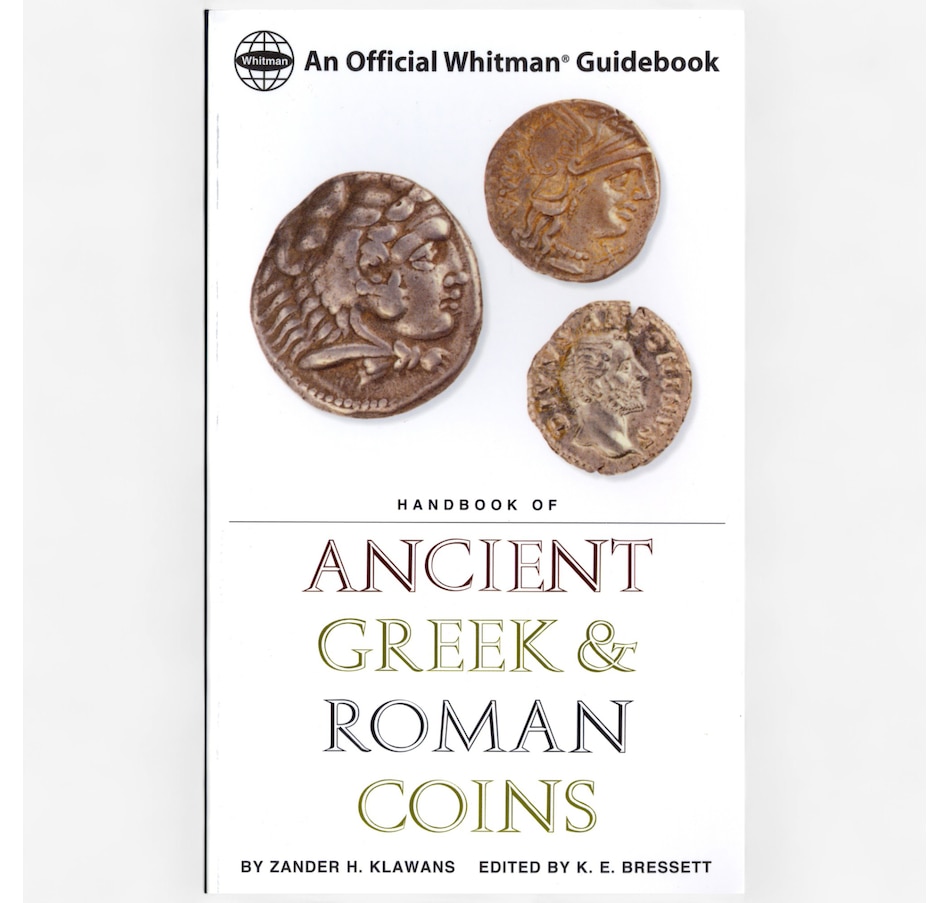
Six-Piece Ancient Roman Collection 198–375 CE plus Ancient Roman Signet Ring circa 100 BCE–400 CE and Two Books: "Handbook of Ancient Roman and Greek Coins" and "Rings for the Finger"
Free Shipping
Product Overview
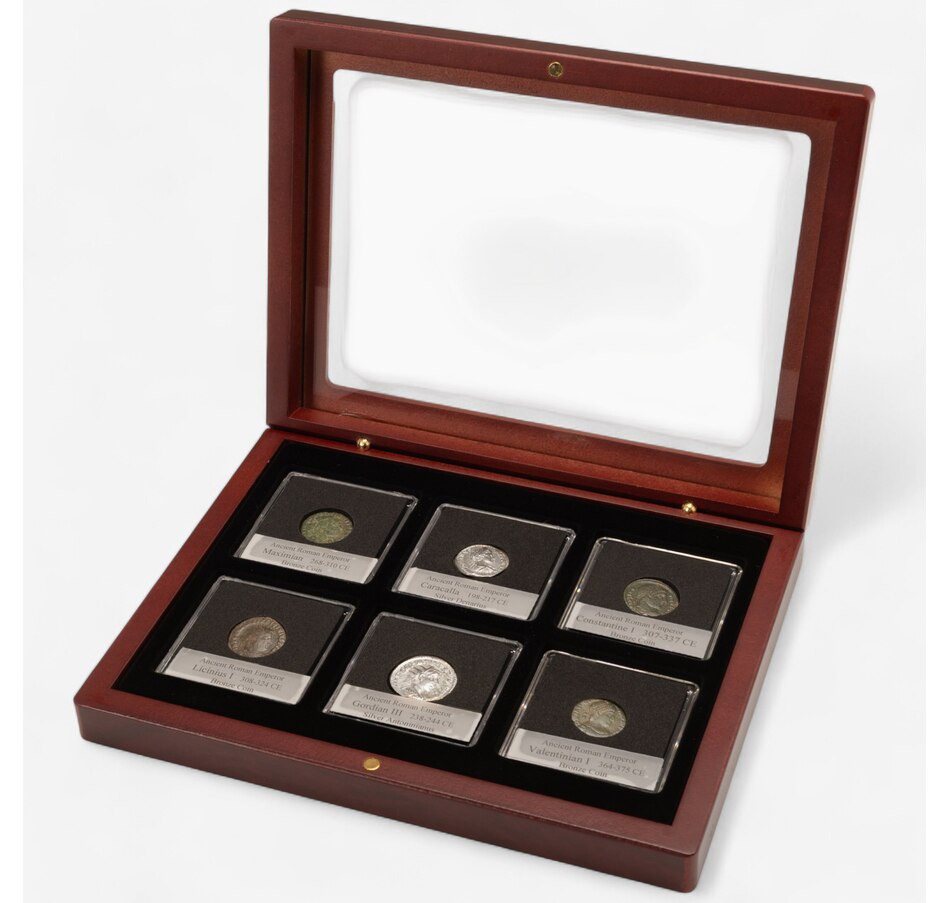
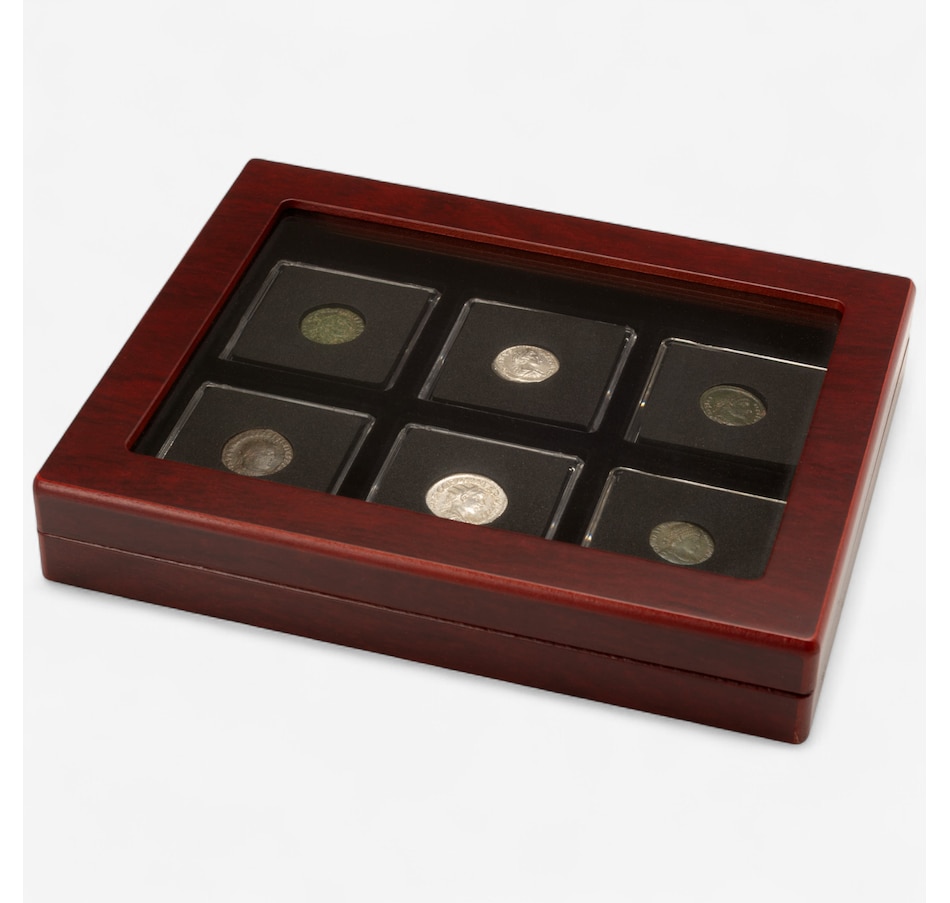
This collection includes six different genuine coins of ancient Rome dating from 198 to 375 CE, plus an original Roman signet ring from 1,600 to 2,100 years ago. Two of the Roman coins are silver and four are struck in bronze. The first silver coin is a denarius issued under Caracalla (198–217 CE), one of the most interesting and sadistic emperors ever to rule the Roman Empire. Other coins are issued by Gordian III (238–244 CE), Constantine the Great (307–337 CE), Maximian (268–310 CE), Licinius I (308–324 CE), and Valentinian I (364–375 CE). Two comprehensive books are also included to enhance the historical context: Handbook of Ancient Roman and Greek Coins, and Rings for the Finger.
Silver Denarius, Caracalla (198–217 CE)
Caracalla is widely regarded as one of the cruellest and most sadistic rulers the world has ever known. He was the older of the two sons of Septimius Severus and Julia Domna, born in Lugdunum (Lyons, France) on April 6, 188 CE, and given the name Bassianus. Caracalla was a nickname given to him because of the long coat of the same name which he introduced from Gaul (France) to Rome, and which was his favourite form of dress.
Though only 10 years old, Caracalla was proclaimed co-emperor in 198 CE along with his younger brother Geta. Unhappy with sharing power, Caracalla had his brother murdered along with 20,000 of his brother's friends and supporters. He loved the blood sports of the arena, and for his entertainment he threw thousands of Christians to the lions before tens of thousands of cheering, bloodthirsty Roman spectators. Much to the relief of the Empire, Caracalla was finally murdered in 217 CE by his bodyguard Macrinus, who succeeded him as emperor.
Silver Antoninianus Gordian III (238–244 CE)
Gordian was proclaimed Caesar in 238 CE under the joint reign of the emperors Balbinus and Pupienus. Upon their death, he succeeded to the throne at the age of 14. Little is known of the six years of his rule, perhaps an indication of peace and general prosperity throughout the empire during this period. However, in 244 CE, Gordian was murdered by his bodyguard Philippus, who succeeded him to the throne as Philip I.
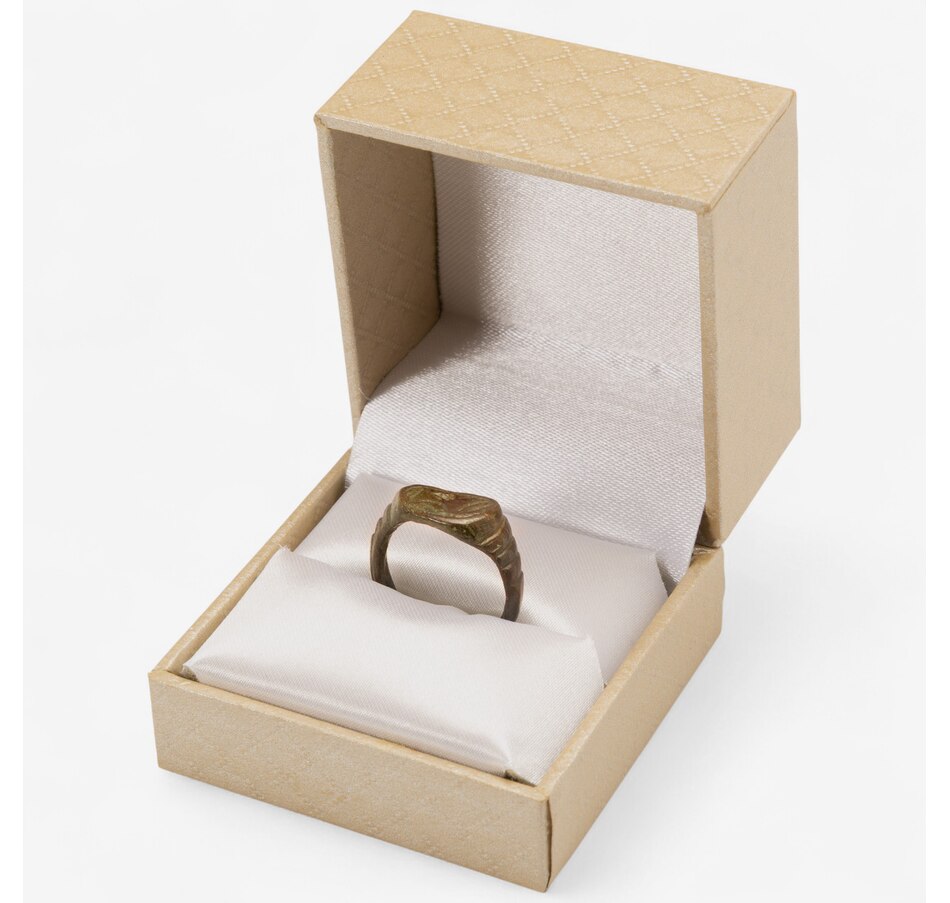
Ancient Roman Signet Ring Circa 100 BCE–400 CE
Finger rings were commonly worn during ancient Roman times. While gold and silver were worn by the wealthy, the ordinary citizens of ancient Rome wore rings made of brass or bronze. This is an attractive premium-quality original example of an ancient Roman bronze signet ring, dating from 100 BCE to 400 CE. A certificate of authenticity is included, as well as a comprehensive book entitled Rings for the Finger. The book traces the history of finger rings from ancient times to modern, and provides additional insight and background on the signet ring.
Apart from personal adornment, early signet rings were also functional. They were used as a form of personal identification much like a signature would be used today. Lead or wax would be melted and dripped onto a surface, then the signet ring impressed onto it. As literacy spread throughout the Empire, this functional duty diminished in importance except for ceremonial purposes; however, the signet ring continued in use as personal adornment.
Includes:
• Premium 6-Piece Ancient Roman Collection 198–375 CE and Premium Bronze Signet Ring 100 BCE–400 CE, plus Two Books
Warranty Information:
This product comes with a 30-day return policy through TSC.