


Tsars and Empress of Russia Coins and Notes, 1547–1912
711-432
$269.95
Free Shipping
or
12 Payments of $22.49
with
Product Overview
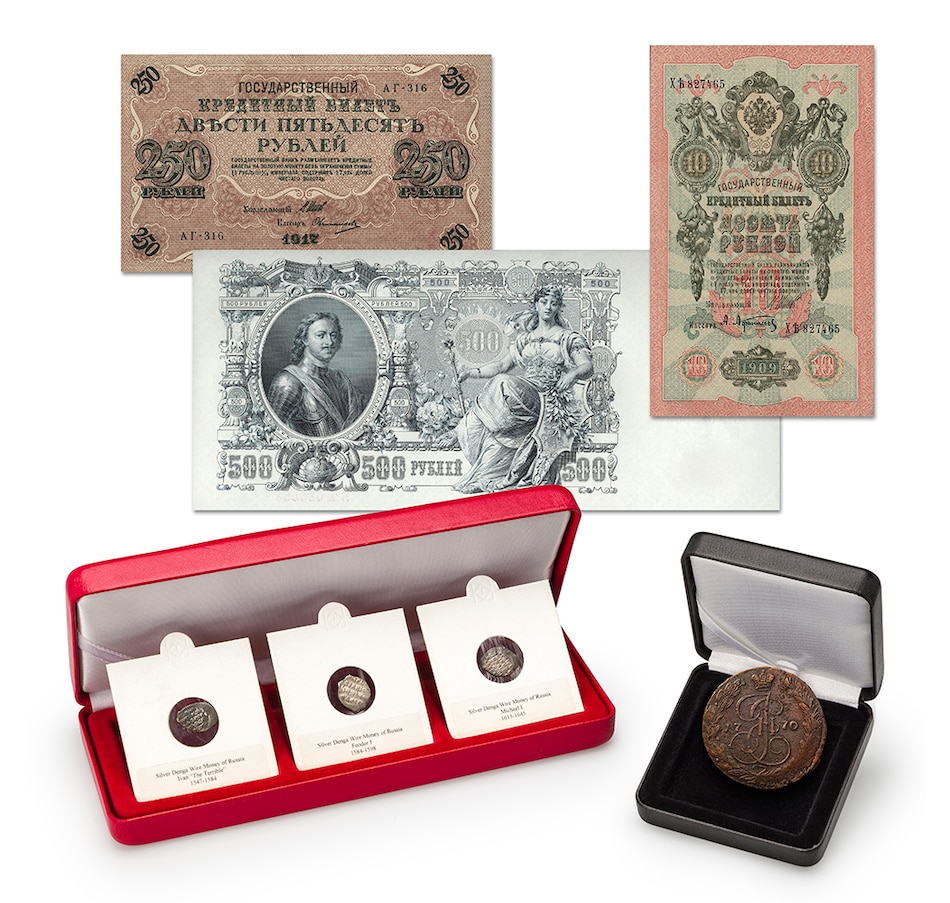
This impressive historical collection includes both coins and banknotes from Russia, dated from 1547 through to 1912. Included are three silver denga (half kopek) coins issued from 1547 to 1645, a very large bronze 5 kopek coin dated from 1763-1796, and three bank notes issued by the last Tsar of Russia Nicholas II from 1909 to 1917.
Coins Included:
Silver Denga ("Wire Money"):
Most of these coins feature an image of the Tsar on horseback on one side, and Cyrillic lettering on the other side with the name of the Tsar and date. The plural of this denomination, dengi, has since developed into the general Russian term for money. Three silver dengi are included in this collection: Ivan the Terrible, 1547–1584; Feodor I, 1584–1598; and Michael I, 1613–1645.
Five-Kopek Coins of Catherine the Great, 1763–1796:
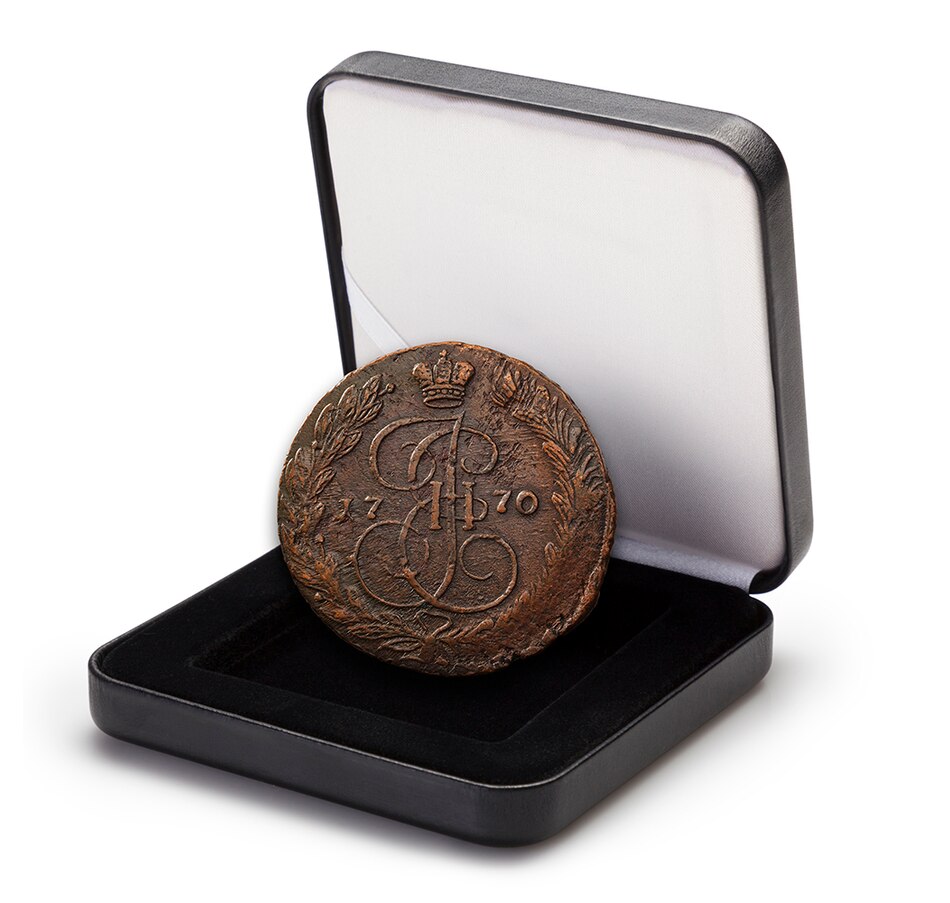
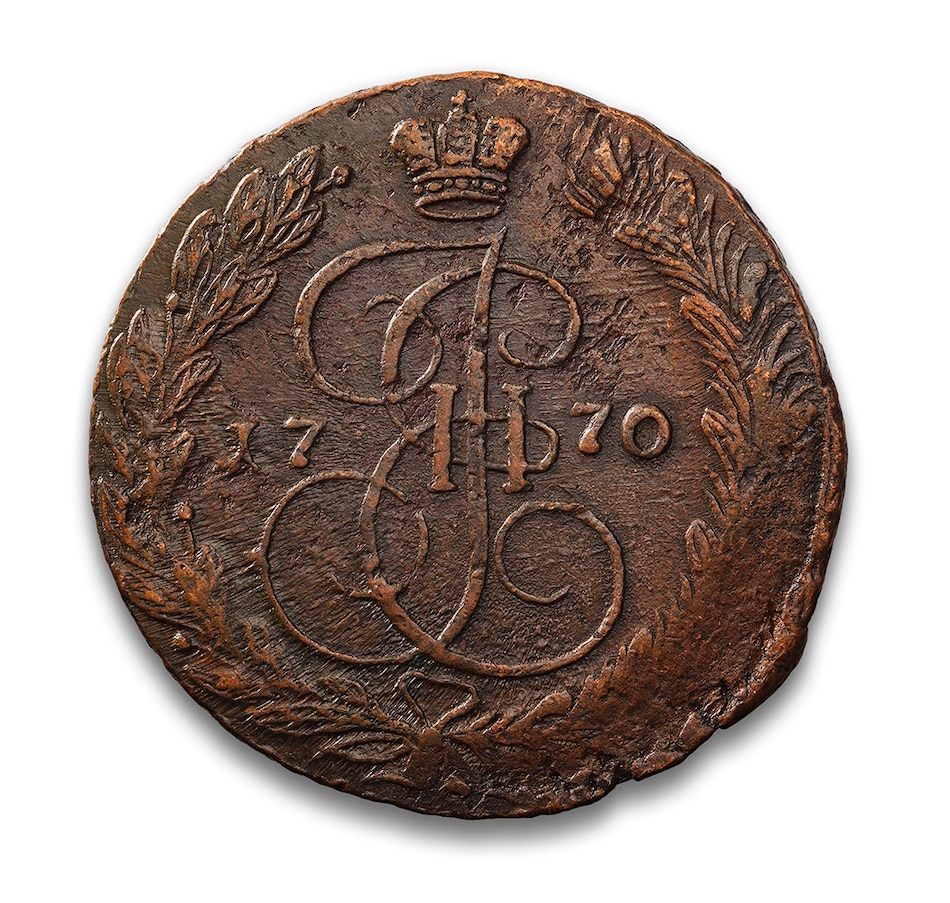
During the reign of Catherine the Great, the crudely struck five-kopek coin served as an important denomination in everyday transactions. The main front design features the date encircled by a wreath with the monogram of Catherine the Great, while the back features a double-headed eagle. The two-headed eagle symbolizes Russia’s geographical location in the middle of Europe and Asia; the two heads are needed to watch over the two continents and protect Russia's people.
500-Rouble Banknotes of Peter the Great in Battle Suit with Seated Princess, 1912:
This impressive historical collection includes both coins and banknotes from Russia dated from 1547 through to 1912. Included are three silver denga (half-kopek) coins issued from 1547 to 1645, a very large bronze five-kopek coin dated from 1763 to 1796, and three banknotes issued by the last tsar of Russia, Nicholas II from 1909 to 1917.
250-Rouble Banknote, 1917:
This note marked the first time that the 250-rouble denomination was offered in Russia by a governing body as legal tender. The most intriguing features on the banknote are the large provisional eagle in the centre, and the fact that it features five swastikas on the entire banknote. On the front side, a swastika can be seen behind each of the "250" numbers in the centre-sides of the front. On the back, one swastika can be seen right behind each of the "250" numbers. The fifth swastika is also on the back, and is printed directly behind the provisional eagle in the centre. The swastika was put there as a sign of good luck.
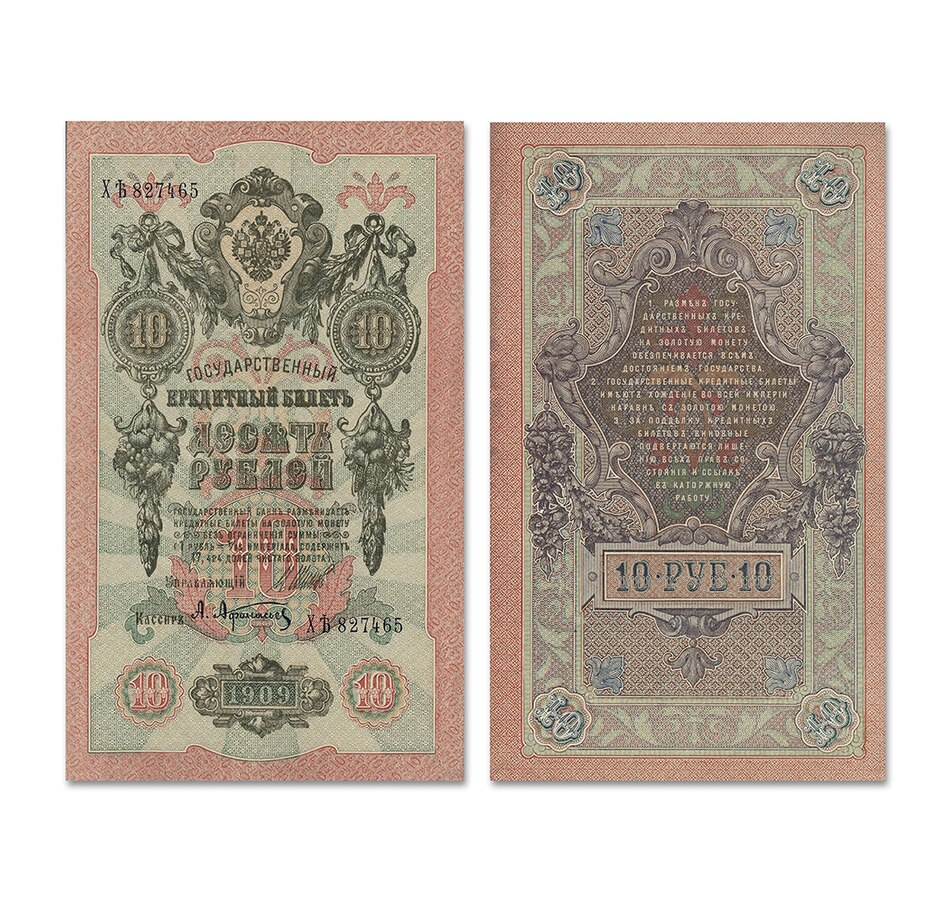
10 Roubles, 1909:
• Arms with a Russian eagle
Historical Information:
Silver Denga ("Wire Money"):
While most of the world went through a renaissance of culture and technology, the coinage of Russia from the mid 1500s to the early 1700s remained crudely struck and of sizes that were inconvenient for commerce. From 1547 to 1645, the standard denga denomination was a very small silver coin produced using an unusual but efficient minting method. Rather than producing individual coin blanks, thick silver wire was used to create small coins. The wire was positioned between the dies and struck with a heavy hammer to produce the design. The struck "coin" was then broken off, and the next coin could be struck. The result is a distinctive oval shape with rough edges on both sides.
Ivan the Terrible, 1547–1584:
Ivan the Terrible assumed the throne at the age of 17 and proclaimed himself the tsar of Russia. He began a reign of terror, hand-picking a militia to enforce his orders, culminating in a massacre of 60,000 citizens, all of whom were tortured for plotting to side with Poland. He was described as intelligent and devout, with episodic breaks of mental illness. In a rage, Ivan killed his son with an iron rod.
Feodor I, 1584–1598:
He was the last Rurikid tsar of Russia, son of Ivan the Terrible and Anastasia Romanovna. He was born in Moscow and crowned tsar and autocrat of all Russia in 1584. He was unhealthy and by some reports intellectually disabled. His duties were handed over to his wife's brother and trusted minister Boris Godunov, who would later succeed Feodor as tsar. Feodor's childless death left the Rurikid dynasty extinct, and spurred Russia's descent into the "Time of Troubles."
Michael I, 1613–1645:
He became the first Russian tsar of the house of Romanov. He was the nephew of Feodor I through his aunt Anastasia Romanovna, and his accession marked the end of the "Time of Troubles." Michael suffered from a leg injury (a consequence of a horse accident early in his life), which resulted in an inability to walk towards the end of his life. He was a gentle and pious prince who gave little trouble to anyone and effaced himself behind his counsellors. In 1626 he married Eudoxia Streshnevain, who brought him 10 children.
Peter the Great, 1721–1725:
At the age of 10, Peter was proclaimed tsar, however with power struggles he was forced to co-rule with his brother. He was instrumental in Russia becoming one of the major European powers. He organized a Russian regular army, built up the navy and was an experienced shipbuilder. At six feet, eight inches in height, he was a big, strong man and not afraid of physical labour, unlike previous monarchs.
Catherine the Great, 1763–1796:
Catherine the Great remains one of the most important and influential members of the Romanov Dynasty. She came to power in 1762 when she was just 33 years old after orchestrating a coup that forced her estranged husband, Emperor Peter III, to abdicate. He was later assassinated, making Catherine the undisputed monarch of the world’s largest nation. Despite her ruthless rise to power, Catherine revitalized Russia into one of the great powers of Europe. Today, her long 34-year reign is known as the Golden Age of the Russian Empire. However, while Catherine's reign achieved substantial growth in the arts, literature, architecture, education, medicine and law, the majority of Russians continued to live as poor serfs or peasants.
Includes:
• Tsars and Empress of Russia Coins and Notes, 1547–1912
Warranty Information:
This product comes with a 30-day warranty through the manufacturer.
Coins Included:
Silver Denga ("Wire Money"):
Most of these coins feature an image of the Tsar on horseback on one side, and Cyrillic lettering on the other side with the name of the Tsar and date. The plural of this denomination, dengi, has since developed into the general Russian term for money. Three silver dengi are included in this collection: Ivan the Terrible, 1547–1584; Feodor I, 1584–1598; and Michael I, 1613–1645.
Five-Kopek Coins of Catherine the Great, 1763–1796:
During the reign of Catherine the Great, the crudely struck five-kopek coin served as an important denomination in everyday transactions. The main front design features the date encircled by a wreath with the monogram of Catherine the Great, while the back features a double-headed eagle. The two-headed eagle symbolizes Russia’s geographical location in the middle of Europe and Asia; the two heads are needed to watch over the two continents and protect Russia's people.
500-Rouble Banknotes of Peter the Great in Battle Suit with Seated Princess, 1912:
This impressive historical collection includes both coins and banknotes from Russia dated from 1547 through to 1912. Included are three silver denga (half-kopek) coins issued from 1547 to 1645, a very large bronze five-kopek coin dated from 1763 to 1796, and three banknotes issued by the last tsar of Russia, Nicholas II from 1909 to 1917.
250-Rouble Banknote, 1917:
This note marked the first time that the 250-rouble denomination was offered in Russia by a governing body as legal tender. The most intriguing features on the banknote are the large provisional eagle in the centre, and the fact that it features five swastikas on the entire banknote. On the front side, a swastika can be seen behind each of the "250" numbers in the centre-sides of the front. On the back, one swastika can be seen right behind each of the "250" numbers. The fifth swastika is also on the back, and is printed directly behind the provisional eagle in the centre. The swastika was put there as a sign of good luck.
10 Roubles, 1909:
• Arms with a Russian eagle
Historical Information:
Silver Denga ("Wire Money"):
While most of the world went through a renaissance of culture and technology, the coinage of Russia from the mid 1500s to the early 1700s remained crudely struck and of sizes that were inconvenient for commerce. From 1547 to 1645, the standard denga denomination was a very small silver coin produced using an unusual but efficient minting method. Rather than producing individual coin blanks, thick silver wire was used to create small coins. The wire was positioned between the dies and struck with a heavy hammer to produce the design. The struck "coin" was then broken off, and the next coin could be struck. The result is a distinctive oval shape with rough edges on both sides.
Ivan the Terrible, 1547–1584:
Ivan the Terrible assumed the throne at the age of 17 and proclaimed himself the tsar of Russia. He began a reign of terror, hand-picking a militia to enforce his orders, culminating in a massacre of 60,000 citizens, all of whom were tortured for plotting to side with Poland. He was described as intelligent and devout, with episodic breaks of mental illness. In a rage, Ivan killed his son with an iron rod.
Feodor I, 1584–1598:
He was the last Rurikid tsar of Russia, son of Ivan the Terrible and Anastasia Romanovna. He was born in Moscow and crowned tsar and autocrat of all Russia in 1584. He was unhealthy and by some reports intellectually disabled. His duties were handed over to his wife's brother and trusted minister Boris Godunov, who would later succeed Feodor as tsar. Feodor's childless death left the Rurikid dynasty extinct, and spurred Russia's descent into the "Time of Troubles."
Michael I, 1613–1645:
He became the first Russian tsar of the house of Romanov. He was the nephew of Feodor I through his aunt Anastasia Romanovna, and his accession marked the end of the "Time of Troubles." Michael suffered from a leg injury (a consequence of a horse accident early in his life), which resulted in an inability to walk towards the end of his life. He was a gentle and pious prince who gave little trouble to anyone and effaced himself behind his counsellors. In 1626 he married Eudoxia Streshnevain, who brought him 10 children.
Peter the Great, 1721–1725:
At the age of 10, Peter was proclaimed tsar, however with power struggles he was forced to co-rule with his brother. He was instrumental in Russia becoming one of the major European powers. He organized a Russian regular army, built up the navy and was an experienced shipbuilder. At six feet, eight inches in height, he was a big, strong man and not afraid of physical labour, unlike previous monarchs.
Catherine the Great, 1763–1796:
Catherine the Great remains one of the most important and influential members of the Romanov Dynasty. She came to power in 1762 when she was just 33 years old after orchestrating a coup that forced her estranged husband, Emperor Peter III, to abdicate. He was later assassinated, making Catherine the undisputed monarch of the world’s largest nation. Despite her ruthless rise to power, Catherine revitalized Russia into one of the great powers of Europe. Today, her long 34-year reign is known as the Golden Age of the Russian Empire. However, while Catherine's reign achieved substantial growth in the arts, literature, architecture, education, medicine and law, the majority of Russians continued to live as poor serfs or peasants.
Includes:
• Tsars and Empress of Russia Coins and Notes, 1547–1912
This product comes with a 30-day warranty through the manufacturer.